SEO for Ecommerce Platforms: The Ultimate Guide to Organic Growth
SEO for ecommerce platforms is the practice of optimizing your online store so it ranks higher in search engines like Google — and drives more sales without relying solely on paid ads. Unlike paid advertising, which stops the moment you stop paying, a robust SEO strategy creates a self-sustaining ecosystem that continues to attract high-quality leads year after year.
Here's a quick overview of what effective ecommerce SEO involves:
| Component | What It Means |
|---|---|
| Keyword Research | Find commercial and transactional keywords buyers actually search |
| On-Page Optimization | Optimize product titles, descriptions, URLs, and meta tags |
| Technical SEO | Fix site speed, mobile usability, HTTPS, and crawlability |
| Site Architecture | Structure pages so users and search engines can navigate easily |
| Content Marketing | Create buying guides and comparison content that drives purchase decisions |
| Link Building | Earn authoritative backlinks to build domain trust |
Core Components of SEO for Ecommerce Platforms
The stakes are real. 75% of people never look past the first page of search results. If your store isn't ranking, it simply isn't being found. In a crowded digital marketplace, being on page two is often equivalent to being invisible.
Yet most ecommerce founders treat SEO as an afterthought — layering it on top of a site that was never built for it. The result? Wasted crawl budget, duplicate content, thin product pages, and organic traffic that flatlines while ad spend climbs. This guide walks you through every layer of ecommerce SEO — from technical foundations to product page optimization to content strategy — so you can build organic visibility that compounds over time.
I'm Alexander Palmiere, Founder and CEO of Refresh Digital Strategy, and I've spent years helping growth-stage businesses implement SEO for ecommerce platforms that drives measurable, long-term results. Having launched over 200 websites, I've seen what separates stores that scale organically from those that scale invisibly.
Simple guide to SEO for ecommerce platforms:
When we talk about SEO for ecommerce platforms, we aren't just talking about ranking for a single word. We are talking about capturing a user at the exact moment they are ready to open their wallet. This is where the distinction between B2B and B2C models becomes vital. While a B2C shopper might impulsively buy a "dry dog food" (a term that gets 1.3K searches monthly in the US), a B2B buyer often requires educational content and a longer buying cycle.
The harsh reality of search is that 75% of people never look past page 1. To get there, your digital strategy SEO must prioritize transactional intent. These are "buy now" keywords. Commercial keywords, on the other hand, are used by people comparing options—think "best ergonomic office chairs."
To win, we start by defining buyer personas. Who are they? What keeps them up at night? Once we know the "who," we perform keyword mapping. This involves assigning specific keywords to specific pages to avoid "keyword cannibalization" (where your own pages compete against each other). We look for a balance of high search volume and manageable keyword difficulty. For newer stores, targeting low-volume, highly specific "long-tail" keywords can often lead to faster conversions because the intent is so clear. By dominating these niche queries, you build the topical authority necessary to eventually rank for broader, more competitive terms.
Technical Foundations and Site Architecture
Think of your website's architecture as the blueprint of a physical store. If a customer can't find the milk because it's hidden behind the garden hoses, they'll leave. In the digital world, we follow the "3-click rule": a user should be able to reach any product on your site within three clicks from the homepage. This logical hierarchy ensures that both users and search engine crawlers can find your most important pages without getting lost in a maze of subdirectories.

At Refresh, we are huge advocates for Webflow. Its clean code and flexibility make it a powerhouse for SEO for ecommerce platforms. Unlike some bulky platforms that slow down under the weight of too many plugins, Webflow allows us to build lean, mean, ranking machines. Webflow's CMS is particularly powerful for ecommerce because it allows for custom fields that map directly to schema markup, making it easier to manage large inventories without the technical debt associated with legacy platforms.
Site speed is no longer a luxury; it's a requirement. According to PageSpeed Insights, every second of delay can slash your conversion rate by 7%. This is especially true for mobile users. With Statista mobile commerce data showing that mobile accounts for over 59% of total retail ecommerce sales, a "mobile-first" approach is the only approach.
Technical factors you cannot ignore include:
- HTTPS: This is a confirmed Google ranking signal. If your site isn't secure, Google won't trust you, and neither will your customers.
- XML Sitemaps: This is a map for Google's bots. It tells them exactly which pages are important.
- Faceted Navigation: While filters (size, color, price) are great for users, they can create thousands of duplicate URLs that waste your "crawl budget." We use canonical tags to tell Google which version of a page is the "master" copy.
- Core Web Vitals: These are Google's metrics for user experience, focusing on loading speed (LCP), interactivity (FID), and visual stability (CLS). Improving these metrics often leads to a direct boost in search rankings and user retention.
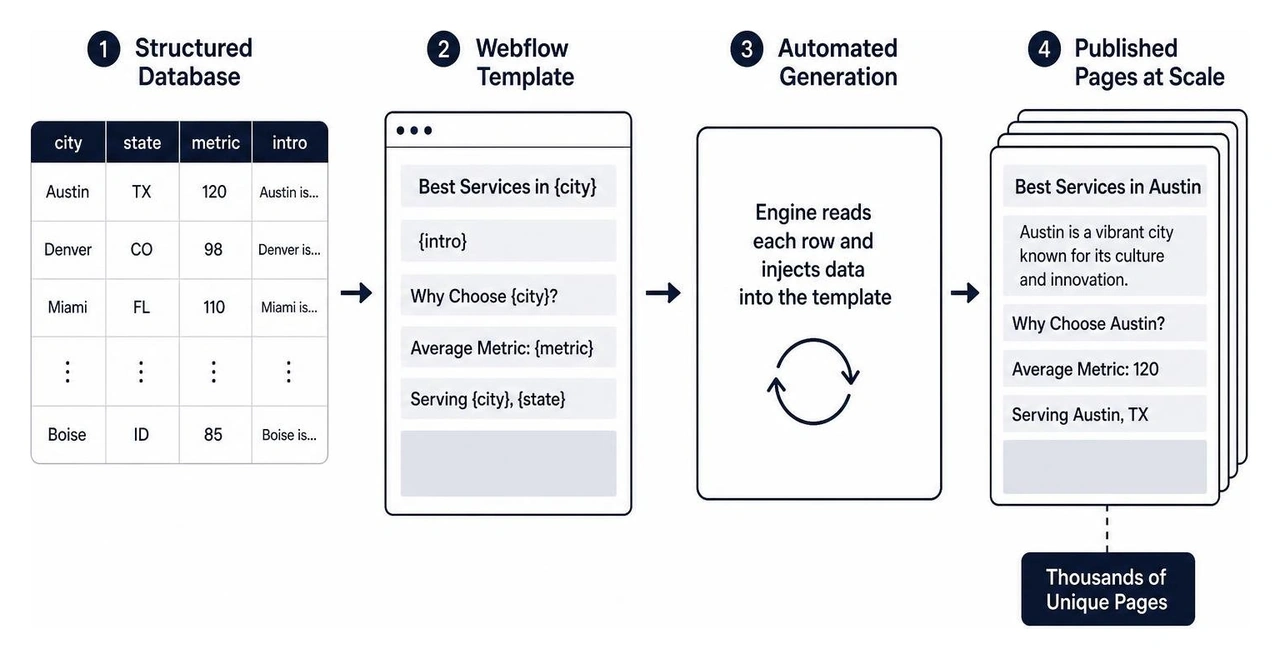
For stores with massive inventories, we often utilize programmatic SEO to generate high-quality, optimized pages at scale without sacrificing the human touch. This allows us to target thousands of long-tail variations efficiently, ensuring that every potential search query has a dedicated, high-quality landing page.
Optimizing Product and Category Pages for Maximum ROI
If your category pages are the aisles of your store, your product pages are the sales pitch. Many store owners make the mistake of using the manufacturer's product descriptions. Don't do this. Google hates duplicate content, and so do shoppers. Unique, benefit-driven copy is what separates a generic listing from a high-converting product page that resonates with your specific audience.
To maximize ROI, focus on these on-page elements:
- Title Tags & Meta Descriptions: Keep titles under 60 characters. Use the formula: [Brand] + [Product Name] + [Main Feature]. This ensures your titles aren't truncated in search results and remain highly clickable.
- Structured Data: Implementing product markup documentation allows your listings to show "Rich Snippets" (like star ratings and prices) directly in search results. A Search Engine Land CTR study found that structured markup can increase click-through rates by up to 30%.
- Image Optimization: Unoptimized images can account for 75% of a page's weight. We use WebP images and descriptive alt text to ensure fast loading and better visibility in Google Image Search. Alt text also improves accessibility for visually impaired users.
- Internal Linking: This is the most underused tactic in ecommerce. By linking related products or "buying the look," you distribute link equity throughout your site, helping lower-authority pages rank higher.
- Breadcrumb Navigation: This provides a clear path for users to navigate back to category pages and helps search engines understand your site's hierarchy. It is a simple yet powerful way to enhance both UX and SEO simultaneously.
- User-Generated Reviews: Reviews provide fresh, unique content that Google loves. They also build the social proof needed to turn a "browser" into a "buyer." Encouraging customers to leave detailed feedback can significantly improve your long-tail keyword rankings.
Content Marketing and Authority Building
Content is the fuel for your SEO engine. In fact, research shows that content is the biggest ranking factor for long-term success. But we aren't talking about boring "company news" blog posts. We're talking about bottom-of-funnel content that answers actual customer questions. This approach ensures that every piece of content you produce serves a specific purpose in the buyer's journey.
Buying guides and comparison articles (e.g., "X vs. Y") are goldmines for organic traffic. They target users who are in the "consideration" phase of the funnel. Furthermore, we must now optimize for GEO (Generative Engine Optimization). As AI-driven search engines become more prevalent, they look for conversational queries and authoritative answers. If your content provides the best answer to "what are the best winter boots for Pittsburgh slush?", you're more likely to be cited by AI search tools. This visibility in AI-generated summaries is becoming a critical component of modern SEO for ecommerce platforms.
Building authority also requires a solid link building guide strategy. High-quality backlinks are like votes of confidence for your store. We focus on digital PR—earning mentions in reputable publications—and building relationships with niche influencers. This is a core part of our small business SEO services. By combining high-quality content with authoritative backlinks, you create a competitive moat that protects your rankings from algorithm shifts.
Frequently Asked Questions about Ecommerce SEO
How does SEO for ecommerce platforms differ from standard SEO?
Standard SEO often focuses on information (blogging for the sake of traffic). Ecommerce SEO is strictly about transactions. It involves managing thousands of product URLs, handling out-of-stock items without losing rankings, and using specific product schema that a standard blog wouldn't need. It also requires a much heavier focus on technical health to manage the "crawl budget" of a large-scale catalog, ensuring that search engines prioritize your most profitable pages over low-value utility pages.
Which ecommerce platforms are best for SEO?
While many platforms exist, we believe Webflow is the premier choice for businesses that value speed, design, and SEO. Its ability to produce clean, semantic code without the bloat of traditional CMS platforms gives it a significant edge. Webflow also offers native SEO controls that allow for precise management of meta tags and redirects without needing external plugins. When choosing SEO optimization companies, ensure they understand the technical nuances of your specific platform.
How long does it take to see results from SEO for ecommerce platforms?
SEO is a marathon, not a sprint. Typically, you'll see technical "quick wins" (like fixing broken links or speed issues) within a few weeks. However, significant ranking jumps and compounding ROI usually take 3 to 6 months. This timeline allows search engines to crawl your new structure, index your optimized content, and recognize your growing authority. Over time, these efforts create a sustainable asset that continues to grow in value, unlike paid ads which require constant investment.
Conclusion
Building a successful online store in Pittsburgh, Cleveland, or Charlotte requires more than just a great product. It requires a digital presence that search engines trust and users love. Whether you are a boutique retailer in the Strip District of Pittsburgh or a growing B2B supplier in Charlotte, your digital presence must be as polished and professional as your physical operations. At Refresh, we specialize in long-term partnerships that go beyond simple "fixes."
We combine our Webflow expertise with data-driven SEO strategies to help small and medium-sized businesses dominate their niche. Ready to stop burning your budget on ads and start building an organic asset? Start your ecommerce transformation with us today. Our team is ready to help you scale your visibility and drive sustainable growth through expert SEO for ecommerce platforms.


.avif)