

Why Website Redesign Matters for Your Business
Web design redesign is more than updating colors or swapping photos. It's a strategic change of your website's foundation to better serve your business goals and user needs.
Quick Answer: What is a Website Redesign?
A website redesign involves:
- Strategic changes to site architecture, functionality, and user experience
- Content updates that align with current business objectives
- Visual modernization that reflects your brand identity
- Technical improvements for speed, security, and SEO
- Mobile optimization for the 60%+ of users on phones
This differs from a website refresh, which only updates visual elements and minor UX improvements without changing the underlying structure.
When should you redesign? Your website likely needs a redesign if you're experiencing:
- High bounce rates and low conversions
- Poor mobile experience
- Slow load times (even 1 second can reduce conversions by 7%)
- Outdated design that doesn't reflect your brand
- Difficulty managing or updating content
- Security vulnerabilities
- Not meeting your business goals
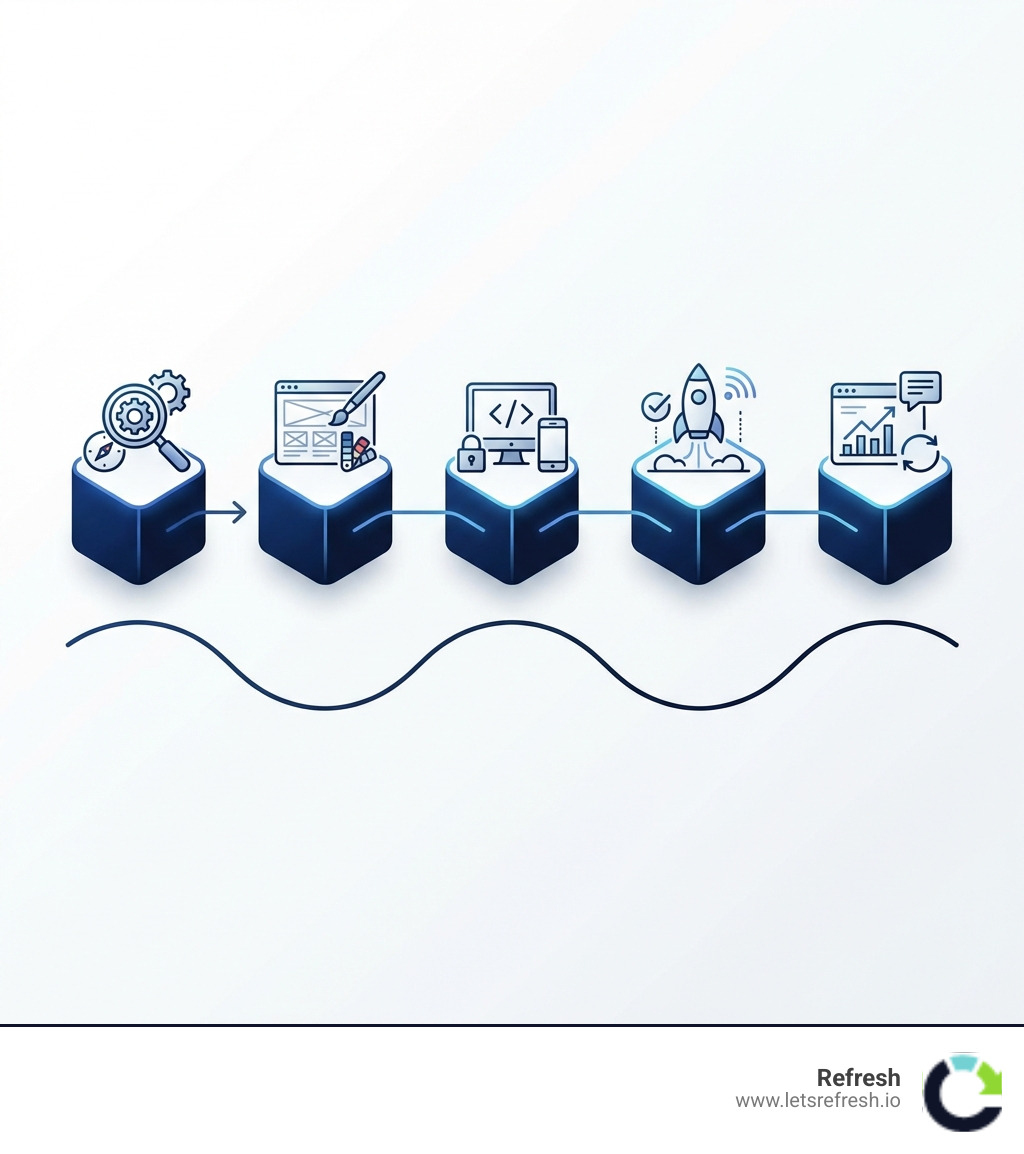
The redesign process typically takes 4-8 months and involves five key phases: Strategy, Design, Development, Launch, and Analysis. Each phase requires careful planning to avoid common pitfalls like SEO ranking drops or traffic loss.
I'm Alexander Palmiere, founder of Refresh Digital Strategy, where I've successfully developed and launched over 200 websites for small to midsized businesses. Throughout my career, I've guided companies through the web design redesign process, helping them transform outdated sites into high-performing digital assets that drive real business results.
Key web design redesign vocabulary:
The "Why": Redesign vs. Refresh and Key Warning Signs
Before diving into how to approach a web design redesign, let's clarify the terms. A "website redesign" and a "website refresh" represent different levels of commitment and impact, and understanding the distinction is key to setting realistic expectations.
A website refresh is like a new coat of paint. It involves minor cosmetic or user experience (UX) updates, such as changing colors, updating graphics, or tweaking layouts. The underlying structure and core functionality remain the same. It’s about making small improvements to stay visually appealing.
A web design redesign is a comprehensive overhaul—a full renovation. It transforms your website’s foundation to better serve business goals and user needs. This involves strategic changes to site architecture, functionality, and user experience, often including a complete overhaul of your site’s infrastructure. It's a deep dive into content strategy, technical improvements, and mobile optimization.
Here’s a quick comparison:
| Feature | Website Refresh | Website Redesign |
|---|---|---|
| Scope | Minor visual and UX updates | Comprehensive overhaul: content, structure, design, functionality, architecture, UX |
| Objective | Align with current brand identity, minor improvements | Realign with business goals, improve user experience, improve performance, update tech |
| Effort | Less time, lower cost | More time (typically 4-8 months), higher investment |
| Impact | Aesthetic improvement, slight UX boost | Transformative, impacts business results, SEO, conversion rates |
| Underlying Tech | Largely unchanged | Often involves changes to infrastructure, platform, or new features |
Signs Your Website Needs a Redesign
How do you know if your website is due for a full web design redesign? Here are key warning signs:
Outdated Design & Poor User Experience (UX): An outdated design can make your business seem out of touch. If navigation is confusing or users can't find information easily, you have a poor user experience that leads to high bounce rates and frustrated visitors.
Lack of Mobile Responsiveness: With over 60% of web traffic coming from mobile devices, a site that isn't mobile-friendly alienates a huge portion of your audience. Google also prioritizes mobile-first sites in rankings, making mobile optimization a necessity. For more insights, check out our guide on Mobile-First Design Strategy: Designing for Small Screens and Big Impact.
Slow Load Times: Users expect instant loading. Even a one-second delay can reduce conversions by 7%. A slow site hurts both user experience and your SEO, as page speed is a crucial ranking factor.
Declining Performance Metrics & Low Conversions: If your website isn't effectively converting visitors into customers, its design or user journey needs rethinking. Declining traffic, high bounce rates, and low engagement are all red flags.
Outdated or Irrelevant Content: Content that is generic, hard to read, or no longer aligned with your offerings can erode trust and hurt search rankings. A redesign is an excellent opportunity to revamp your content strategy.
Security Vulnerabilities: Outdated technology can expose your site to cybersecurity threats, risking customer data and damaging your reputation. Modern security standards like HTTPS are non-negotiable.
Difficult Content Management & Outdated Technology: If updating your website is a constant struggle, it’s time for a change. Modern platforms offer better security, performance, and flexibility, making content management easier.
Benefits and Drawbacks of a Website Redesign
A web design redesign is a significant undertaking with compelling benefits and potential drawbacks.
Benefits of a Website Redesign:
- Improved Performance: A redesign optimizes for speed, mobile responsiveness, and overall technical health, leading to a smoother user experience.
- Improved User Experience (UX): We can streamline navigation and simplify user flows to keep visitors engaged and guide them toward conversion.
- Higher Conversion Rates: By addressing pain points and optimizing the user journey, a redesign can significantly boost your website's ability to generate leads or sales.
- Stronger Brand Alignment: A redesign ensures your digital presence accurately reflects your current brand identity, building trust and credibility.
- Better SEO Potential: A well-executed redesign improves technical SEO, content optimization, and mobile-friendliness, helping your site rank higher and attract more organic traffic.
- Competitive Edge: A modern, high-performing website positions you as a leader in your industry.
For more on the impact, explore The Transformative Power of a Website Redesign for Small Businesses.
Drawbacks of a Website Redesign:
- Cost and Time Investment: A comprehensive redesign requires a significant financial investment and can take four to eight months.
- Potential for Temporary Traffic Dips: If SEO best practices aren't carefully followed, a redesign can temporarily impact your online visibility.
- Challenges in Content Migration: Moving existing content to a new site structure can be complex and, if done incorrectly, can harm your SEO.
- Risk of Disrupting Established User Habits: Significant changes can initially disorient existing users, though careful planning can mitigate this.
The "How": A Step-by-Step Web Design Redesign Process
Starting on a web design redesign becomes a manageable and rewarding process with a structured approach. We've distilled it into five essential steps for success.
Step 1: Define Clear Objectives, Scope, and Budget
This is the most critical phase. Without clear objectives, a redesign lacks direction. We believe it's crucial to identify specific website goals from the start to ensure your new site produces the results you expect.
- Set SMART Goals: Define what you want your redesigned site to achieve (e.g., "Increase qualified leads by 20% within six months of launch").
- Define Project Scope: List the must-have pages, functionalities (e.g., e-commerce, contact forms), and integrations to prevent scope creep.
- Establish a Budget: Being specific about your budget allows for better decisions on features and complexity. For detailed insights, see our Comprehensive Guide on Small Business Website Costs.
- Identify KPIs: Determine how you will measure success, such as conversion rates, bounce rates, or organic traffic.
- Align with Business Objectives: Ensure the redesign supports your overall company goals. A website is a business tool that should serve your broader strategic vision, whether you're in Pittsburgh, Cleveland, or Charlotte.
Step 2: Audit Your Current Site and Research Your Audience
Before building something new, we must understand what's working and what isn't. This phase involves a thorough check-up of your current site and an investigation into your users.
- Conduct a Website Audit: We gather data on your existing site's technical performance, user behavior, and conversion metrics using tools like Google Analytics. This helps spot areas for improvement.
- Analyze Performance Metrics: We dive into metrics like traffic sources, bounce rate, and conversion rate to understand user flow. Heatmaps can reveal how users actually interact with your site.
- Perform Competitor Analysis: We look at competitors' websites to understand industry trends and identify opportunities to make your redesigned site stand out.
- Understand Your Target Audience: It’s important to know who your website is for. We analyze data to gain a deep understanding of user behavior, preferences, and pain points, which helps tailor the redesign to meet their needs.
- Create User Personas: Based on research, we create semi-fictional representations of your ideal customers to ensure the new design resonates with them.
- Identify User Pain Points: We identify what frustrates users on your current site to design solutions that improve satisfaction. Understanding why SEO is important in a digital marketing strategy is also crucial here.
Step 3: Plan Your Content, UX, and Visual Design
With a solid strategy in place, we move into the creative planning of the new website.
- Develop a Content Strategy: Content should drive design. We'll develop a strategy that outlines what content is needed, how it will be organized, and what message it will convey to your target audience.
- Conduct a Content Audit: We review all existing content to decide what to keep, improve, or remove, ensuring only valuable, SEO-friendly content makes it to the new site.
- Build Information Architecture (IA) & Sitemap: We organize your site's content logically and create a sitemap—a visual blueprint of the site structure—to ensure users can find what they need easily.
- Wireframe Key Pages: We create skeletal blueprints of your key pages, focusing on layout and functionality before adding visual design elements.
- Focus on UX/UI Design: We design for a smooth, intuitive experience (UX) and create a visually consistent and pleasing interface (UI) that reinforces your brand. We integrate Webflow UX Design principles for seamless interactions.
- Strengthen Branding: We choose a color palette, typography, and high-quality imagery that reflect your brand identity and establish a clear visual hierarchy.
- Prioritize Mobile-First Design: We design for small screens first to ensure an optimal experience for the majority of users, which aligns with Google's mobile-first indexing.
- Ensure Website Accessibility: We build your site to be usable for everyone, including those with disabilities, by implementing features like keyboard navigation and screen reader compatibility. For more details, consult A guide to ADA compliance.
Step 4: Choose Your Tech, Preserve SEO, and Develop
This phase brings the design to life, focusing on the technical backbone and ensuring your search rankings are improved.
- Select the Right Technology Stack: Choosing the right platform is pivotal. For many businesses in Pittsburgh, Cleveland, and Charlotte, we recommend Webflow for its flexibility, design capabilities, and performance.
- Preserve and Improve SEO: A redesign can harm your SEO if not handled correctly. Our goal is to improve it.
- Conduct Keyword Research: We use professional tools to identify the terms your audience is searching for. We analyze search volume and competition to target the best opportunities, avoiding harmful practices like keyword stuffing.
- Implement On-Page SEO: We integrate keywords into high-quality content, add descriptive alt-text for images, and optimize meta tags to help search engines understand your pages.
- Create a 301 Redirect Map: If page URLs change, implementing 301 redirects is non-negotiable. This guides users and search engines from old URLs to new ones, preventing errors and preserving your search visibility and link equity.
- Develop the Site: Our developers build the website, translating designs into a robust, high-performing platform with clean code and seamless integrations.
- Conduct Quality Assurance (QA) Testing: Before launch, we conduct rigorous testing to check for bugs, broken links, and cross-device compatibility, ensuring everything functions flawlessly.
Step 5: Plan the Launch and Post-Launch Analysis
The launch is the beginning of a new phase of optimization and growth.
- Prepare a Launch Checklist: We create a detailed checklist covering all final preparations, from backing up the old site to implementing redirects.
- Consider a Phased Rollout: For larger sites, a phased rollout can minimize disruption and allow for adjustments before a full launch.
- Monitor Post-Launch Performance: Immediately after launch, we actively monitor the new site's performance using tools like Google Analytics to track key metrics and identify any issues.
- Track KPIs and Gather Feedback: We monitor your KPIs, such as traffic, bounce rate, and conversion rate, and gather user feedback to identify areas for improvement.
- Run A/B Tests: To continually optimize, we can run A/B tests on different elements to see which versions drive better results.
- Commit to Continuous Improvement: A website is never truly finished. We believe in continuous analysis and iteration based on data to ensure long-term success. This is key to Maximizing Website Performance: Tips and Best Practices.
Frequently Asked Questions about Website Redesigns
We understand that a web design redesign can raise many questions. Here are some of the most common ones we encounter:
How long does a website redesign take?
The timeline for a web design redesign varies based on its size and complexity, but you should generally plan for four to eight months. Smaller sites might take 1-3 months, while large, complex enterprise sites could take a year or longer. The final timeline depends on the project's scope, team size, content creation needs, and the decision-making process.
Will a website redesign hurt my SEO?
This is a valid concern. A web design redesign can hurt your SEO if done incorrectly, but a strategic approach will almost always improve it. The biggest risks are incorrect 301 redirects, content migration issues, and technical oversights. A comprehensive 301 redirect map is essential to prevent lost traffic and link equity. When handled by experts, a redesign leads to improved site speed, better mobile experience, and updated content—all factors that can boost your SEO and attract more qualified traffic.
How much should I budget for a website redesign?
The cost of a web design redesign varies widely. The final budget depends on your approach (DIY, freelancer, or agency), website size, and the need for custom features or content creation.
- Your Approach: A DIY approach is cheapest but requires your time and expertise. A freelancer is more affordable than an agency but may have limited skills. An agency like Refresh provides a full team of experts for a comprehensive, strategic approach.
- Website Size and Complexity: More pages, content, and intricate functionalities increase the cost.
- Custom Features: Unique functionalities like custom calculators or CRM integrations will increase the budget.
- Ongoing Maintenance: Factor in post-launch support, security updates, and continued digital marketing efforts.
A web design redesign is an investment in your business's future. A high-performing website can significantly increase leads and conversions, providing a strong return on investment. For options that align with your business needs, consider our Affordable Small Business SEO Packages.
Conclusion
A web design redesign is far more than a cosmetic update; it's a strategic, foundational overhaul of your digital presence. It's an opportunity to revitalize your brand, improve user experience, boost performance, and ultimately, drive your business goals forward. From defining clear objectives and auditing your current site to carefully planning content, UX, and visual design, and finally, executing a flawless launch and post-launch analysis, each step is crucial for success.
This strategic process transforms your digital foundation, turning an outdated or underperforming website into a powerful asset that connects with your audience and converts visitors into loyal customers. It's a significant undertaking, requiring careful planning, a clear understanding of your audience, and a commitment to continuous improvement.
Choosing the right partner for this journey is paramount. At Refresh, we specialize in guiding small to medium-sized businesses through the complexities of web design redesign. Our expertise in Webflow development, combined with our comprehensive SEO, branding, and social media management services, ensures a holistic approach custom to the unique needs of businesses in Pittsburgh, PA, Cleveland, OH, and Charlotte, NC. We believe in building long-term partnerships, helping you achieve lasting digital success.
Are you ready to transform your online presence and open up new growth opportunities? Partner with a Webflow Development Company for your next project and let us help you build a website that truly works for your business.


.avif)