Why Small Business SEO Success Starts with the Right Tools
SEO tools for small businesses are essential for competing online without breaking the bank. Here are the most effective options:
Free Essentials:
- Google Business Profile - Your local SEO foundation
- Google Search Console - Track performance and fix issues
- Google Analytics - Understand your audience
- Screaming Frog (free version) - Audit up to 500 pages
Budget-Friendly Paid Options:
- SE Ranking ($29/month) - All-in-one SEO platform
- Ubersuggest ($29/month) - Keyword research and competitor analysis
- Mangools ($29/month) - User-friendly SEO toolkit
If you're running a small business, you've probably felt the frustration of watching competitors show up on Google while your website stays buried on page two. The good news? You don't need a massive budget to compete.
The reality is simple: most small businesses waste money on expensive tools they'll never fully use. The secret isn't buying the most expensive software - it's understanding which tools actually move the needle for your specific situation.
As one forum user perfectly put it: "You do not need tools to do SEO. Especially not paid tools. Use Google Search Console. It is free and already gives you a lot of data."
Local SEO should be your priority. Unlike traditional SEO that can take 12+ months to show results, local optimization can drive customers to your door within weeks. Focus on your Google Business Profile first - you're much more likely to see quick wins there.
At Refresh, we've helped hundreds of small businesses steer the digital landscape and boost their online visibility. Through years of testing SEO tools for small businesses, we've learned that success comes from choosing the right tools for your specific needs, not the most popular ones.
Seo tools for small businesses helpful reading:
The Essential Free SEO Tools for Small Businesses
When you're starting out with a tight budget, the best news is that some of the most powerful SEO tools for small businesses won't cost you a penny. These foundational tools from Google's free suite give you everything you need to understand your website's performance and user behavior without spending a dime.
Think of these three tools as your SEO starter pack. They work together to give you a complete picture of how your business appears online and how customers find and interact with your website.
Your Digital Storefront: Google Business Profile
Your Google Business Profile is like your digital storefront window - it's often the first thing potential customers see when they search for businesses like yours. This free tool is absolutely essential for local search visibility, especially if you serve customers in specific areas.
Here's what makes Google Business Profile so powerful: it puts you directly on Google Maps and in local search results. When someone searches for "plumber near me" or "best pizza in town," a well-optimized profile can put your business front and center.
The magic happens when you actively manage your profile. Regular updates, responding to reviews, and using the Q&A feature can make a huge difference in attracting local customers. Post updates about special offers, new services, or seasonal hours. Answer questions from potential customers. Most importantly, respond to every review - both positive and negative.
The best part? You're much more likely to see quick results with local SEO than traditional SEO efforts. While broad SEO can take months, local optimization often shows results within weeks.
Ready to get started? Check out our detailed guide on Local SEO Strategy and Get started with Google Business Profile.
Understanding Your Performance: Google Search Console
Google Search Console is like having a direct conversation with Google about your website. It tells you exactly how the search engine sees your site and what issues might be holding you back.
This tool tracks your website's health and shows you which keywords are bringing people to your site. You can spot indexing issues before they become problems, see which pages are performing best, and understand what search terms people use to find you.
One of the most valuable features is the URL inspection tool. It lets you check if specific pages are properly indexed and identifies any technical problems that might prevent your content from showing up in search results. You'll also get insights into user experience signals that Google considers when ranking your site.
The performance tracking features show you keyword rankings over time, so you can see if your SEO efforts are paying off. When you publish new content or make changes to your site, Search Console helps you monitor the impact.
To understand why this data matters for your overall marketing strategy, read our post on Why is SEO Important in a Digital Marketing Strategy. Ready to dive in? Learn more about Google Search Console.
Analyzing Your Audience: Google Analytics
While Google Search Console tells you how Google sees your website, Google Analytics reveals how real people interact with it. This free tool is your window into visitor behavior and helps you understand what's working and what isn't.
Google Analytics shows you where your website traffic comes from - whether it's organic search, social media, or direct visits. You can see which pages keep people engaged and which ones make them leave immediately. This information is gold when you're trying to improve your site's performance.
The tool tracks the complete customer journey from the moment someone finds your website to when they become a customer. You can see which traffic sources lead to the most conversions and identify your top-performing pages that you should replicate or promote more.
Setting up conversion tracking does require some technical setup, and it can be a bit complex for beginners. But once it's running, you'll have detailed insights into how your SEO efforts translate into real business results.
These customer journey insights are crucial for developing content that actually serves your audience's needs. For more on creating effective content strategies, explore our guide on SEO Digital Marketing Content Strategy.
Key Tool Categories and Must-Have Features
As your small business grows and your SEO needs become more sophisticated, you'll naturally start looking beyond the free essentials. Think of this as your roadmap for smart tool selection - we're not here to sell you on every shiny new gadget, but to help you find the SEO tools for small businesses that genuinely move your business forward.
The beauty of understanding tool categories is that it prevents you from making expensive mistakes. Too many small business owners get overwhelmed by feature lists and end up paying for tools they'll never fully use. Instead, let's focus on what actually matters for your growth.

Uncovering Opportunities with Keyword Research Tools
Imagine trying to have a conversation with someone when you don't speak their language. That's what happens when you create content without understanding what your customers are actually searching for. Keyword research tools bridge this gap by revealing the exact words and phrases your potential customers type into search engines.
The magic happens when you find those long-tail keywords - those longer, more specific phrases that might get fewer searches but convert much better. For instance, instead of competing for "pizza" (nearly impossible), you might target "best gluten-free pizza delivery downtown Cleveland" (much more achievable and valuable).
Good keyword research tools show you search volume (how many people search each month), keyword difficulty (how hard it'll be to rank), and most importantly, user intent - what people really want when they search. Tools like Ubersuggest excel at identifying highly relevant keywords that potential customers use to find businesses like yours.
Even free keyword tools can uncover relevant topics to get you started. Keywords Everywhere offers a super functional free plan for quick ideas, while more robust options like Semrush provide easy-to-use tools like their Keyword Magic Tool and Keyword Strategy Builder.
Here's the thing though - more keywords don't always equal better results. In fact, they can lead to keyword stuffing, which Google absolutely hates. Focus on quality keywords that truly match what your customers need.
To master this crucial skill, dive deeper into The Role of Keywords in SEO and How to Use Them Effectively.
Ensuring a Healthy Website with Technical SEO Tools
Your website might have the most brilliant content in the world, but if it's technically broken, it's like having a beautiful store with a locked front door. Technical SEO tools act as your website's personal health monitor, catching problems before they hurt your rankings.
These tools crawl through your site like a search engine would, identifying broken links that frustrate visitors, checking that redirects work properly when you've moved pages, and analyzing your page titles and meta descriptions to ensure they display correctly in search results.
Site speed and mobile-friendliness have become absolutely critical - Google prioritizes these heavily because they directly impact user experience. A slow website doesn't just hurt your rankings; it drives potential customers straight to your competitors.
Screaming Frog SEO Spider is a fantastic desktop-based crawler that analyzes your website's pages for potential SEO problems. It crawls your website like a search engine spider, helping uncover technical issues like broken links or problematic 301 redirects. The best part? The free version lets you check up to 500 URLs, making it perfect for most small business websites.
For those ready to invest a bit more, tools like Sitebulb offer comprehensive technical audits starting around $14/month, providing deeper insights as your website grows.
Understanding your website's technical foundation is a core part of building an effective digital presence. Learn more about this at What is SEO Strategy in Digital Marketing.
Creating High-Ranking Content with Optimization Tools
Once you've got your keywords and a healthy website, it's time for the fun part - creating content that both Google and your audience absolutely love. Content optimization tools are like having an experienced editor looking over your shoulder, providing real-time suggestions based on what's actually working in search results.
These tools analyze top-ranking pages through SERP analysis, helping you understand why certain content performs well. They check your readability scores to ensure your writing connects with real people, monitor keyword density to avoid over-optimization, and can even generate content briefs that guide your writing process.
SurferSEO stands out as a powerful content creation tool for maximum-impact articles. If you have a page that isn't ranking well, Surfer can help you improve it with detailed recommendations. Their Content Editor provides keyword suggestions and recommended headings for content optimization. Aiming for a content score of at least 67 in tools like SurferSEO can significantly boost your content's potential.
For WordPress users, Rank Math is an excellent SEO plugin that provides content recommendations based on SEO best practices. It analyzes your content to ensure it's optimized for your target keyword before you click "publish."
AI-powered suggestions are becoming increasingly valuable, helping generate SEO content ideas, draft outlines, improve your writing, and make much of your work more efficient. The key is using these tools to improve your expertise, not replace your unique voice and insights.
If you're running a service-based business, effective content optimization can be a complete game-changer. Find more strategies at SEO for Service-Based Business.
Dominating Your Neighborhood: Local SEO Focus
For small businesses, especially those serving specific communities, local SEO isn't just another marketing tactic – it's your secret weapon. While big corporations fight over national keywords, you can dominate your neighborhood and connect directly with customers who are ready to buy from you today.
The beauty of local SEO lies in its immediacy. When someone searches for "plumber near me" or "best pizza in Cleveland," they're not browsing – they're buying. This is where SEO tools for small businesses focused on local optimization can transform your visibility overnight.

Why Local SEO is a Game-Changer for New Businesses
Here's something that might surprise you: local SEO delivers results faster than traditional SEO. While broad SEO campaigns can take 12+ months to show meaningful traffic, local optimization can start driving customers to your door within weeks.
The numbers tell the story. Local searches have higher conversion rates because they capture people at the moment they need your service. Someone searching for "emergency locksmith" isn't comparison shopping – they need help now. This intent-driven traffic is gold for small businesses.
You're also facing less competition than you might think. Instead of competing against every business in your industry nationwide, you're only up against local competitors. That levels the playing field significantly, giving your small business a genuine shot at the top of search results.
Local SEO also builds community trust in ways that national SEO can't. When customers see your business consistently appearing in local searches, responding to reviews, and engaging with the community, you become the trusted local expert. This reputation spreads through word-of-mouth and social media, amplifying your online efforts.
The strategy works because you can leverage local directories and citations that big corporations often overlook. These local touchpoints create a web of credibility that search engines love and customers trust.
For businesses ready to dive deeper into local optimization, our Local SEO Services for Small Business guide offers comprehensive strategies custom to your specific needs.
Strategies for Effective Local SEO
The magic happens when you combine the right tools with proven local SEO strategies. Think of it as building a digital presence that mirrors your physical community involvement.
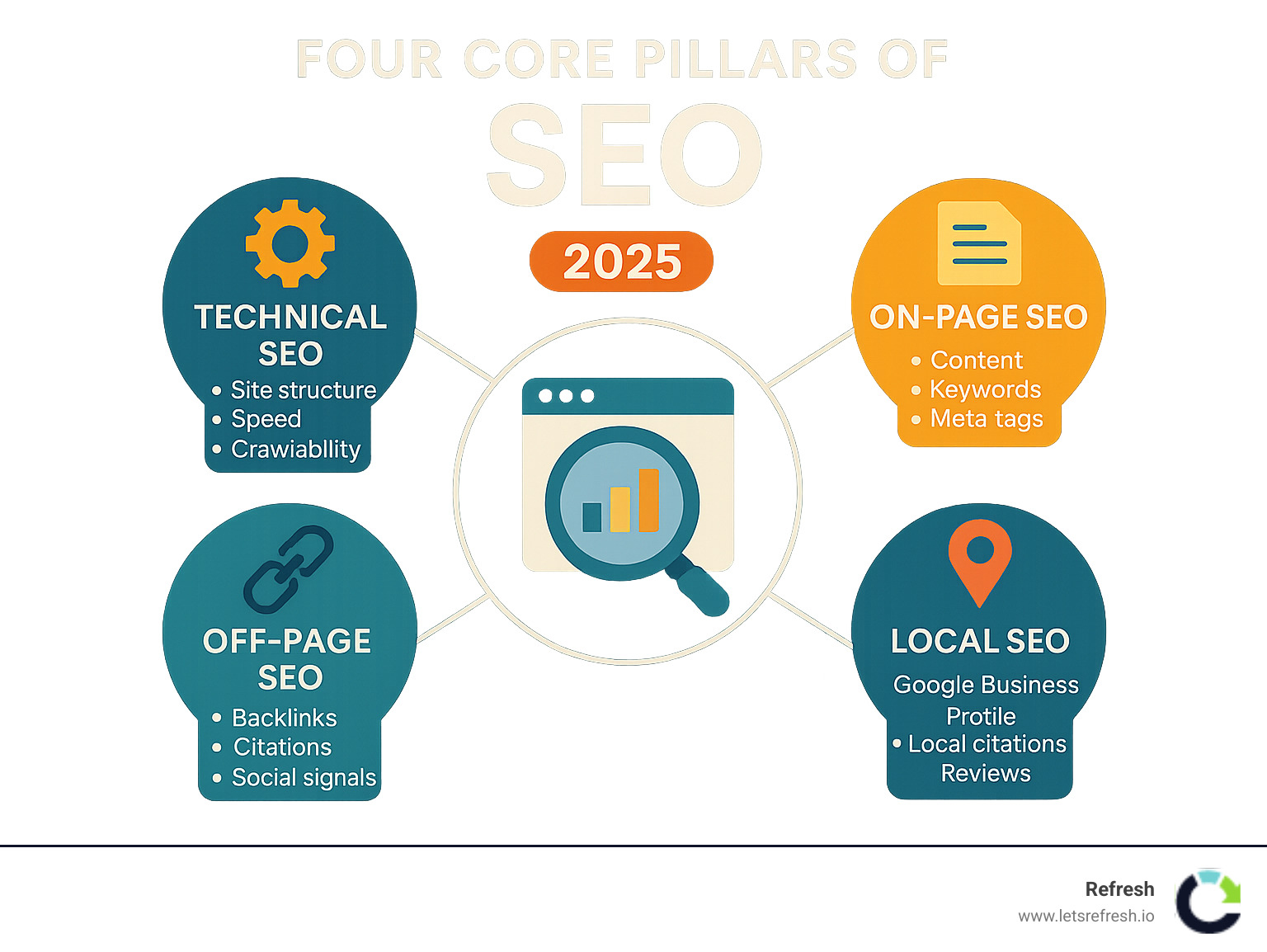
Your Google Business Profile optimization remains the cornerstone of local success. This goes beyond just claiming your listing – you need to treat it like your digital storefront. Fill every section completely, upload high-quality photos that showcase your work, and choose the most accurate categories possible. The real game-changer is staying active: regular updates, responding to every Q&A, and engaging with reviews (both positive and negative) can dramatically boost your visibility.
Building local citations creates the foundation of local trust. These are mentions of your business name, address, and phone number across the web – on directories like Yelp, industry-specific sites, and local business listings. Consistency is crucial here. If your address is listed as "123 Main St" on one site and "123 Main Street" on another, it confuses search engines and weakens your local authority.
Gathering local reviews turns happy customers into your marketing team. Each positive review acts as both a trust signal for potential customers and a ranking factor for search engines. The key is making it easy for satisfied customers to leave reviews and then responding thoughtfully to show you value their feedback.
Creating location-specific content tells search engines exactly where you serve customers. If you operate in multiple areas, consider developing dedicated pages for each location or creating comprehensive "areas we serve" sections. This helps you rank for searches like "accounting services in downtown Pittsburgh" or "wedding photography Charlotte NC."
Local link building connects you with your community online just like networking does offline. Seek partnerships with other local businesses, sponsor community events, or contribute to local news sites. These relevant local links carry more weight with search engines than generic backlinks from unrelated sites.
The beauty of these strategies is that they work together. Your optimized Google Business Profile drives traffic to your website, where location-specific content keeps visitors engaged. Local citations reinforce your credibility, while reviews and local links build the community connections that make small businesses thrive.
Ready to implement these strategies? Our comprehensive guide on SEO for Local Business walks you through each step with practical examples and actionable tips.
Frequently Asked Questions about SEO Tools
Let me address the questions I hear most often from small business owners who are just starting their SEO journey or looking to take their efforts to the next level. These are real concerns from real business owners, and I want to give you practical, honest answers.
What are the most essential free SEO tools for a new business?
When you're bootstrapping a new business, every dollar matters. The good news? The most powerful foundation for your SEO doesn't cost a penny. Google Search Console should be your first stop - it's like having a direct conversation with Google about how your website performs. You'll see which keywords bring people to your site and catch technical problems before they hurt your rankings.
Your Google Business Profile comes next, especially if you serve local customers. I can't tell you how many small businesses I've seen transform their visibility just by properly setting up and maintaining this free tool. Google Analytics rounds out the essential trio by showing you what visitors actually do on your website once they arrive.
For technical health checks, the free version of Screaming Frog lets you crawl up to 500 URLs and spot issues like broken links or missing meta descriptions. It's like having a website doctor that works for free.
Don't overlook free keyword research options either. Keywords Everywhere offers a super functional free plan that's perfect for getting started. You can also access Google Keyword Planner through a free Google Ads account, even if you never run a single ad.
The beauty of starting with these free SEO tools for small businesses is that you'll learn the fundamentals without any financial pressure. Once you master these, you'll know exactly what paid tools might actually help your specific situation.
How can I use AI for my small business SEO?
AI has become a game-changer for small businesses, and we're genuinely excited about how it levels the playing field. You don't need expensive software to harness AI power - tools like ChatGPT can become your SEO assistant for pennies on the dollar.
Content creation is where AI really shines. Stuck staring at a blank page? AI can generate topic ideas based on your industry and audience. Need help structuring an article? It can draft detailed outlines that cover all the important points your readers want to know about.
One of our favorite practical uses is writing meta descriptions and title tags. Try a simple prompt like this, filling in your own business details: "Act as an SEO specialist and help me create a compelling meta description and page title for my homepage. The page is about a local bakery that specializes in custom cakes and gluten-free pastries." You'll get several options to choose from and refine.
AI also excels at improving existing content. Paste in a paragraph that feels clunky, and ask AI to make it more readable or engaging. It can help you expand on ideas, rephrase awkward sentences, and even suggest related topics you might have missed.
Remember though - AI is your assistant, not your replacement. Always review and adjust AI-generated content to match your brand voice and ensure it provides real value to your customers. The goal is efficiency, not losing your authentic voice.
When should my small business invest in paid SEO tools?
This question hits close to home because we see too many small businesses waste money on expensive tools they don't need yet. The truth is, you absolutely don't need paid tools to do effective SEO, especially when you're starting out.
Consider investing in paid SEO tools for small businesses when SEO becomes a primary driver of your business growth. If organic search consistently brings in quality leads and sales, then tools that help you scale those efforts make financial sense.
Time becomes the deciding factor as you grow. When manually checking keyword rankings, auditing your website, or researching competitors starts eating up hours you should spend serving customers, that's when paid tools earn their keep.
Website size matters too. Managing a 20-page website with free tools is totally doable. But if you're running multiple locations or have hundreds of service pages, automation becomes essential for maintaining quality.
The key is mastering the fundamentals first. We've seen businesses buy expensive tools without understanding basic SEO principles, then wonder why they're not seeing results. The tool isn't magic - your understanding of how to use the insights makes the difference.
When you're ready to explore paid options, start with free trials after you've gained experience with the free tools. This way, you'll know exactly what features you need and can make a smart investment decision.
If you're curious about what professional SEO support might look like for your growing business, take a look at our Affordable SEO Packages.
Conclusion
We've covered a lot of ground today, exploring everything from the essential free SEO tools for small businesses that form your digital foundation to the advanced strategies that help you dominate your local market. The most important thing to remember? You absolutely have the power to boost your online visibility, even when your budget is tight.
Start with the fundamentals. Master your Google Business Profile first - it's your quickest path to local visibility. Get comfortable with Google Search Console to understand how your website performs in search results. Use Google Analytics to learn what makes your visitors tick. These free tools pack incredible power when you know how to use them properly.
As your business grows, you might explore paid options, but tools are helpers, not magic wands. The real magic happens when you understand SEO principles and apply what you learn from any tool - free or paid. A $500-per-month tool won't help if you don't know what to do with the data it provides.
The beauty of SEO is that it's a long-term investment. Every blog post you optimize, every local citation you build, and every customer review you earn compounds over time. You're not just improving your search rankings - you're building a stronger, more visible business that customers can find and trust.
At Refresh, we've seen countless small businesses transform their online presence by focusing on the fundamentals first. Whether you're just starting out with your Google Business Profile or ready to tackle more advanced strategies, we're here to guide you through the process. We believe in building long-term partnerships because sustainable growth takes time, patience, and the right expertise.
Your journey to better search visibility starts with that first step. Pick one tool from this guide, dive in, and start learning. Your future customers are searching for exactly what you offer - let's make sure they can find you.
Ready to take your local SEO to the next level? Explore our SEO services to see how we can help you grow.


.avif)