

Why Small Business PPC Management Is Your Fastest Path to Growth
PPC management small business involves creating, monitoring, and optimizing paid advertising campaigns specifically custom for smaller companies with limited budgets and resources. Here's what you need to know:
Key Components:
- Budget Control - Set daily spending limits and cost-per-click caps
- Keyword Targeting - Focus on high-intent, long-tail keywords with lower competition
- Platform Selection - Start with Google Ads, expand to Microsoft Ads and social platforms
- Performance Tracking - Monitor click-through rates, conversion rates, and return on ad spend
- Ongoing Optimization - Regular campaign adjustments based on performance data
If you're a small business owner wondering whether PPC is worth the investment, the numbers speak for themselves. The global PPC market is projected to reach $1 trillion in 2024 with an 8.2% year-over-year increase. Even more compelling? Paid search visits are 35% more likely to result in conversion than organic search visits.
But here's the challenge: 25% of small business PPC budgets are wasted due to poor management and strategic errors. That's money you can't afford to lose.
The good news? With the right approach, PPC can level the playing field. You can compete with bigger brands, reach customers actively searching for your products, and see results within days instead of months.
I'm Alexander Palmiere, founder of Refresh Digital Strategy, where I've helped over 200 small to medium-sized businesses develop effective digital marketing strategies including PPC management small business solutions.

Why PPC Management Small Business Is a Game-Changer
Let's talk numbers that matter to your bottom line. The global PPC market is growing at a whopping 8.2% year-over-year, and here's the kicker - paid search visits are 35% more likely to convert than organic search visits. For small business owners, this isn't just a statistic. It's your competitive advantage.
With PPC management small business strategies, you can appear right above your biggest competitor in search results starting today. That's the power of immediate SERP visibility - no waiting months for SEO to kick in.
What really sets PPC apart is the cost-per-click control you get. You decide exactly how much you're willing to pay for each visitor. Set a daily budget of $50? Your ads stop showing once you hit that limit.
But here's what excites me most about PPC for small businesses - you can compete with big brands from day one. When someone searches for your product or service, your ad can appear right alongside industry giants. The search engine doesn't care about your company size. It cares about relevance and bid strategy.
According to the latest research on global PPC market, small businesses are increasingly recognizing PPC as essential for growth.
The Business Case for Paid Search
Here's where PPC gets really interesting for small business owners. Every click represents someone with buyer intent. They're not just browsing - they typed in a search query because they need something right now.
This qualified traffic is gold for small businesses. When someone searches "emergency plumber downtown" or "best pizza delivery near me," they're ready to make a decision.
The measurable ROI aspect is what makes PPC so powerful for budget-conscious business owners. You can see exactly which keywords brought in customers, which ads performed best, and how much revenue each campaign generated.
PPC vs. SEO for SMBs
I get this question all the time: "Should I focus on PPC or SEO first?" Here's my honest answer - they work better together, but if you need results fast, PPC is your friend.
PPC delivers quick wins. Launch a campaign on Monday, start getting calls by Tuesday. This speed is crucial when you're launching a new business or testing a new service.
SEO provides long-term compounding benefits. Once you rank organically, that traffic keeps flowing without ongoing ad spend.
The real magic happens with channel synergy. When your business appears in both paid ads and organic results, you dominate more of the search results page.
For a deeper dive into how these channels work together, check out our guide on PPC SEO meaning.
Building a Lean PPC Strategy: Step-by-Step Guide
Building a successful PPC management small business strategy doesn't have to be overwhelming. Think of it like planning a road trip - you need to know where you're going before you can map out the best route.
Goal setting is your destination. Are you trying to fill your calendar with service appointments? Drive online sales? Get more people to call your business? Your specific goal shapes every decision that follows.
Platform choice can make or break your budget. Google Ads should be your starting point - it's where most of your customers are searching. Once you've mastered Google and proven your campaigns work, then you can explore Microsoft Ads for additional reach.
Here's where small businesses get a huge advantage: long-tail keywords. While big companies fight over expensive terms like "insurance," you can dominate specific searches like "small business liability insurance Pittsburgh." These longer phrases cost less and convert better.
Negative keywords are your budget's best friend. They stop your ads from showing up for the wrong searches. If you sell premium wedding cakes, you definitely want to block searches for "cheap" or "free."
Ad extensions give you more space to shine without paying extra. Your business address, phone number, and additional links all help your ad stand out.
Landing page CRO is where many small businesses accidentally throw money away. Your landing page must deliver on what your ad promises. If your ad says "Get a free quote in 2 minutes," your landing page better have a simple form that takes 2 minutes to fill out.
Geo-targeting keeps your budget focused. A local restaurant doesn't need clicks from three states away. Set your geographic boundaries based on where you actually serve customers.
SKAGs (Single Keyword Ad Groups) might sound technical, but they're simple in practice. Instead of cramming 20 keywords into one ad group, create focused groups around individual keywords.
When you're ready to work with professionals who know these strategies inside and out, partnering with a Google Ads Certified Agency ensures you're getting up-to-date expertise and proven results.
Keyword Research for PPC Management Small Business
Smart keyword research starts with understanding search intent. Not all searches are created equal. Someone searching "how to fix a leaky faucet" is in learning mode, while "emergency plumber near me" signals they're ready to hire someone right now.
Google Keyword Planner gives you the inside scoop straight from Google's data. You'll see how often people search for terms, how competitive they are, and what you might expect to pay per click.
Local modifiers are pure gold for small businesses. Adding your city name, neighborhood, or "near me" to your keywords helps you capture people who are actually in your service area.
Competitor gaps represent your biggest opportunities. Look at what keywords your competitors are bidding on, then find the ones they're missing.
Building your negative list is an ongoing process. Start with the obvious ones, then add to it as you see what searches trigger your ads.
Ad Creative That Converts
Great ad copy starts with a compelling USP - your unique selling proposition. What makes you different? Maybe you're the only 24-hour service in town, or you offer a 30-day money-back guarantee.
Your strong CTA should tell people exactly what to do next. "Learn more" is weak. "Get your free estimate today" or "Book your appointment now" gives clear direction and sets expectations.
Responsive search ads let Google test different combinations of your headlines and descriptions to find what works best. Write multiple versions of each, and let the platform optimize for you.
Budgeting Tips for PPC Management Small Business
PPC management small business budgeting is all about being smart with your money. Most small businesses spend around $1,000 per month on PPC, but your budget should match your goals and market reality.
Flat fee vs percentage spend models each have their place. Flat fees give you predictable costs. Percentage models mean your agency succeeds when you succeed.
Bid caps prevent nasty surprises. Set maximum cost-per-click limits based on what you can afford to pay for a customer.
Daily pacing spreads your budget throughout the day instead of blowing it all before lunch. Google's standard delivery works well for most small businesses.
Spend allocation should follow your results. Put most of your budget behind what's working, but always reserve some money for testing new keywords and strategies.
Optimizing & Scaling: Metrics, Tools, and 2025 Trends
Success in PPC management small business depends on tracking the right metrics and understanding what they tell you about campaign performance. Click-through rate (CTR) indicates how compelling your ads are to searchers. Cost-per-click (CPC) affects your budget efficiency. Quality Score impacts both your ad position and costs.
Conversion rate reveals how well your landing pages turn clicks into customers. Return on ad spend (ROAS) is the ultimate measure of campaign profitability - it shows how much revenue you generate for every dollar spent on advertising.
Performance Max campaigns represent Google's latest AI-driven approach, automatically placing your ads across all Google properties based on your conversion goals. While powerful, these campaigns require careful monitoring to ensure they align with your business objectives.
Remarketing allows you to re-engage visitors who didn't convert on their first visit. Since these users are already familiar with your brand, remarketing typically delivers higher conversion rates at lower costs.
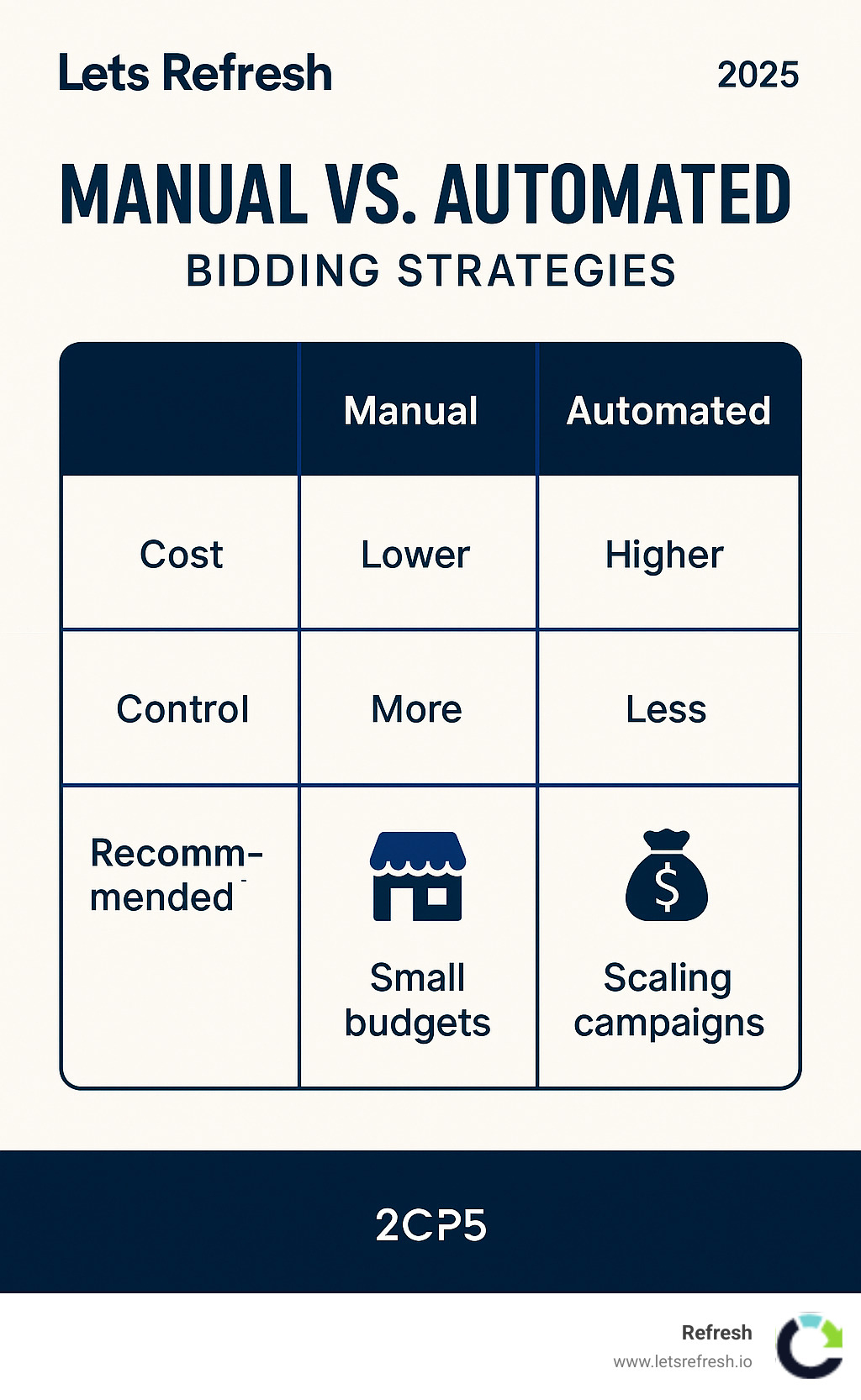
AI bidding strategies like Target CPA and Target ROAS use machine learning to optimize bids in real-time. These automated strategies can outperform manual bidding once you have sufficient conversion data.
Local Service Ads provide additional visibility for service-based businesses, appearing above traditional search ads with Google's guarantee badge. These ads can be particularly effective for businesses in competitive local markets.
Cross-channel data integration helps you understand the full customer journey. A customer might first find you through a display ad, research you through organic search, and finally convert through a paid search ad. Understanding these touchpoints improves attribution and budget allocation.
For a comprehensive view of how PPC fits into your overall digital strategy, explore our guide on SEO Services Digital Marketing Strategy.

Key Success Metrics & Tracking Setup
Proper tracking setup is the foundation of successful PPC management. Google Analytics 4 provides comprehensive insights into user behavior after they click your ads. The conversion tracking pixel allows you to measure specific actions like form submissions, phone calls, or purchases.
Phone call tracking is crucial for service-based businesses where most conversions happen over the phone. Dynamic number insertion can track which keywords and ads generate calls, providing complete attribution data.
Offline conversion tracking bridges the gap between online clicks and offline sales. If customers research online but purchase in-store, you can upload offline conversion data to complete the attribution picture.
Attribution modeling helps you understand the role each touchpoint plays in the conversion process. First-click attribution credits the initial interaction, while last-click attribution credits the final touchpoint. Data-driven attribution uses machine learning to assign credit based on actual conversion patterns.
When and How to Scale
Scaling successful PPC campaigns requires a methodical approach. Start with incremental budget tests - increase spending by 20-30% on your best-performing campaigns and monitor the results closely. If performance remains strong, continue scaling gradually.
Feed-only shopping campaigns can open up significant growth for e-commerce businesses. These campaigns use your product feed to automatically create ads for your entire catalog, often finding profitable keywords you hadn't considered.
High-ROAS campaigns should receive priority for scaling. If a campaign consistently delivers 5:1 or 10:1 returns, it likely has room for increased investment before hitting diminishing returns.
Seasonality adjustments ensure your campaigns align with business cycles. Retail businesses might increase spending before holidays, while B2B companies might reduce spending during summer vacation periods.
Avoiding Common Pitfalls & Saving Budget
Here's a sobering truth: 25% of small business PPC budgets are wasted due to preventable mistakes. That's money you simply can't afford to lose, especially when you're competing against larger companies with deeper pockets.
The good news? Most of this waste comes from basic errors that are entirely avoidable with the right approach and ongoing attention to your campaigns.
Irrelevant clicks are the biggest budget drains I see. This happens when your keyword targeting is too broad or you haven't built a strong negative keyword list. Every week, I review search term reports with clients and find searches that have nothing to do with their business - yet they're paying for those clicks.
Broad match keywords can be particularly dangerous for small budgets. While Google's AI has improved broad match targeting, it can still show your ads for loosely related searches that waste your money. I recommend starting with phrase match and exact match keywords for better control.
Poor landing pages turn every paid click into wasted money. If someone clicks your ad promising "24-hour emergency service" but lands on a generic homepage with no clear way to contact you, you've essentially paid for nothing.
The "set-and-forget" mentality might be the most expensive mistake of all. I've seen business owners launch campaigns, get decent initial results, then ignore them for months. PPC management small business success requires consistent attention and optimization.
Click fraud monitoring protects your budget from invalid clicks - whether from competitors or automated bots. While Google provides basic protection, keeping an eye on unusual click patterns helps safeguard your investment.
Compliance issues can shut down your entire account overnight. Platform policies change regularly, and what worked last month might violate today's rules.
Your A/B testing schedule should be ongoing but methodical. Test one element at a time - whether it's headlines, ad descriptions, or landing page layouts.
Top 5 Mistakes That Drain SMB Budgets
After working with hundreds of small businesses, I've identified five critical mistakes that consistently drain PPC budgets:
No conversion tracking is like driving blindfolded. Without proper tracking, you can't tell which keywords actually generate customers versus which ones just generate clicks.
Ignoring negative keywords leads to irrelevant traffic that costs money but never converts. A local restaurant might waste hundreds of dollars on clicks from people searching for recipes instead of places to eat.
Weak ad copy makes your business invisible in a crowded marketplace. Generic headlines like "Quality Service" don't give searchers any reason to choose you over competitors.
Wrong bidding strategy often means using automated bidding before you have enough conversion data. Google's AI needs sufficient information to optimize effectively.
Lack of regular audits allows small problems to become expensive disasters. Keywords that worked six months ago might now be too competitive or irrelevant.
Quick Wins to Reclaim Wasted Spend
You don't need to overhaul your entire account to see immediate improvements. Here are proven quick wins that can reduce waste and improve performance:
Pause low-performing keywords that consistently generate clicks without conversions. Review your keyword performance over the past 30-60 days and eliminate terms that aren't pulling their weight.
Add call extensions to capture phone-based conversions. Many customers prefer calling over filling out forms, especially for service-based businesses.
Tighten your geographic targeting to focus on areas where you actually do business. If you're a local service provider, clicks from distant locations are worthless.
Improve your call-to-action visibility on landing pages. Make it crystal clear what action visitors should take. Whether it's "Call Now," "Get Free Quote," or "Schedule Consultation," your conversion path should be obvious and friction-free.
Frequently Asked Questions about PPC Management for Small Business
How much should a small business expect to pay for PPC management?
The honest answer? PPC management small business costs vary wildly, but let's break down what you can realistically expect to invest.
Most agencies charge between $2,500 and $10,000 monthly for management services. I know that might sound steep if you're running a small operation, but here's the thing - you're not just paying for someone to click buttons in Google Ads. You're investing in expertise that prevents costly mistakes and maximizes every dollar you spend.
The average hourly rate hovers around $84, though nearly 8% of agencies accept projects below $1,000. This means professional management is within reach even if you're working with a tight budget.
At Refresh, we understand that small businesses need to see value from day one. That's why we focus on finding the sweet spot between professional management and budget reality. Google's own data shows businesses typically earn $8 in profit for every $1 spent on Google Ads, but this only happens with proper setup and ongoing optimization.
My advice? Start with what you can afford, prove the concept works, then scale up. It's better to do PPC right with a smaller budget than to throw money at poorly managed campaigns.
How fast will I see results after launching ads?
Here's what I love about PPC - it's the fastest digital marketing channel you can use. Your ads can be live and generating clicks within hours of setup.
You'll see initial data rolling in within 24-48 hours of launching. But don't expect to make major decisions based on day-one results. Meaningful data that actually helps you optimize usually takes 2-4 weeks to accumulate.
The timeline for positive ROI depends on several factors. If you're a service-based business with high-value transactions - like a plumber or lawyer - you might see profitable results within the first week. E-commerce businesses typically need several weeks to find their rhythm and optimize for profitability.
One thing I always tell clients: PPC isn't a "launch and forget" strategy. The fastest results come from active management and continuous optimization. Think of it like learning to drive - you get better with practice and attention.
The businesses that see results fastest are usually those with clear conversion tracking, compelling landing pages, and realistic expectations about the optimization process.
What questions should I ask a PPC agency before signing a contract?
Smart question! Too many small business owners get burned by agencies that overpromise and underdeliver. Here's what you need to ask to protect yourself and find the right partner.
What's your experience with businesses in my industry? This matters more than you might think. An agency that's managed campaigns for restaurants will understand your challenges better than one that's only worked with software companies.
How do you handle budget management and prevent overspending? You need concrete answers about daily budget caps, bid limits, and emergency procedures. Your agency should have systems that protect your money like it's their own.
What metrics do you track and how often do you report? Transparency is everything in PPC. You should get regular reports that clearly show where your money went and what results it generated. Monthly reports are standard, but weekly check-ins during the first few months show an agency that cares about your success.
Can you provide case studies or references from similar businesses? Any reputable agency should have success stories they're proud to share. If they can't show you results from businesses like yours, that's a red flag.
What happens if we're not satisfied with results? Understand the contract terms upfront. While no agency can guarantee specific results (run from anyone who does), they should stand behind their work and have reasonable policies for underperformance.
Do you offer any guarantees or performance commitments? Look for agencies that offer some form of performance commitment, even if it's just a promise to achieve certain benchmarks within a specific timeframe.
The right agency will welcome these questions and answer them confidently. If someone gets defensive or evasive, keep looking. Your PPC management small business success depends on finding a partner who's as invested in your growth as you are.
Conclusion
Running successful PPC management small business campaigns isn't about outspending your competition - it's about being smarter with every dollar you invest. The small businesses that truly win at PPC understand that it's not a sprint, but a marathon of strategic decisions, thoughtful optimization, and patient data-driven improvements.
Here at Refresh, we've watched countless small businesses transform their growth trajectory through well-managed PPC campaigns. There's the local plumber who went from struggling to find customers to booking three weeks out. The boutique online store that turned a $500 monthly ad budget into $5,000 in monthly revenue.
What separates these success stories from the businesses that burn through their budgets? It all comes down to treating PPC as a long-term investment in growth, not a quick fix.
The foundation never changes: you need crystal-clear goals, rock-solid tracking, laser-focused keywords, and ad copy that makes people want to click. But the real magic happens in the weeks and months that follow - when you're diving into performance data, tweaking campaigns based on what's actually working, and having the discipline to pause what isn't.
You don't need to figure this out alone. Whether you decide to roll up your sleeves and manage campaigns yourself or partner with an agency that gets small business challenges, the most important thing is taking that first step.
We believe in building long-term partnerships that help small businesses not just compete, but actually win in today's digital marketplace. It's not about quick wins or flashy promises - it's about sustainable growth that makes sense for your business and your budget.
The PPC world keeps evolving with new features, smarter automation, and fresh opportunities. But here's what won't change: businesses that understand their customers, create offers people actually want, and make decisions based on real data will always come out ahead.
Ready to turn your marketing dollars into measurable, predictable growth? We'd love to show you how our comprehensive approach to digital marketing can work for your business. Check out more about our services at our Digital Marketing Company page.
The best time to start your PPC management small business journey was yesterday. The second best time? Right now.


.avif)