

Why Most Agency Partnerships Fail and When to Seek a Website Redesign Service
Most agency engagements break down because traditional design shops treat web overhauls as visual art projects rather than digital revenue engines. When an agency focuses exclusively on superficial aesthetics without addressing underlying code bloat, conversion friction, and technical debt, the resulting website fails to generate tangible business returns. By year three, a substantial portion of small to mid-sized business websites suffer from heavy plugin dependencies, broken mobile layouts, and slow server response times that actively turn away qualified buyers.
A true architectural overhaul eliminates conversion friction by aligning modern engineering with user intent. For example, moving away from fragmented platforms and executing a clean Webflow migration streamlines your tech stack, minimizes maintenance headaches, and delivers lightning-fast page load speeds across all screen sizes.
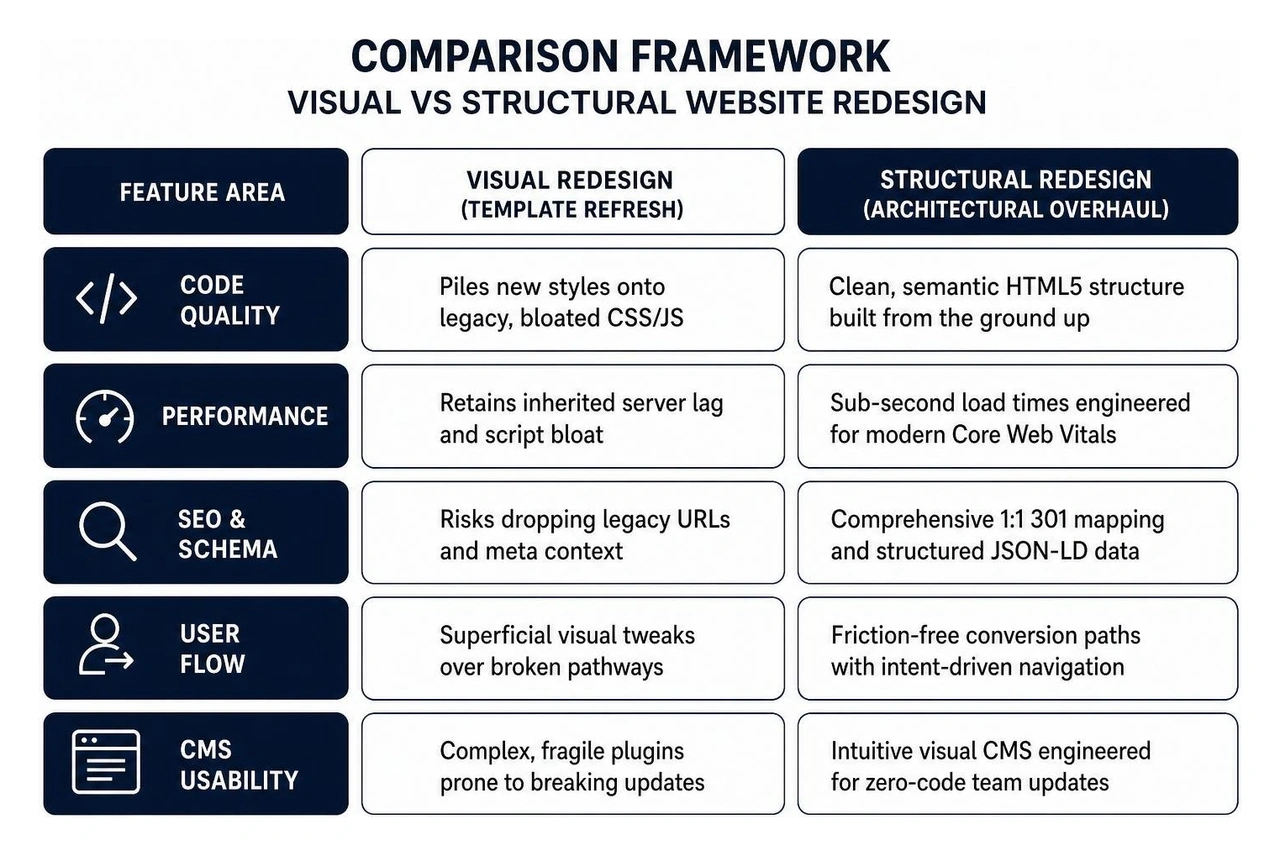
| Feature Area | Template Refresh (Cosmetic Facelift) | Structural Web Overhaul (Architectural Redesign) |
|---|---|---|
| Code Quality | Piles new styles onto legacy, bloated CSS/JS | Clean, semantic HTML5 structure built from the ground up |
| Performance | Retains inherited server lag and script bloat | Sub-second load times engineered for modern Core Web Vitals |
| SEO & Schema | Risks dropping legacy URLs and meta context | Comprehensive 1:1 301 mapping and structured JSON-LD data |
| User Flow | Superficial visual tweaks over broken pathways | Frictionless conversion paths with intent-driven navigation |
| CMS Usability | Complex, fragile plugins prone to breaking updates | Intuitive visual CMS engineered for zero-code team updates |
Signs Your Current Website Is Hurting Business Growth
Visitors form an opinion about your digital presence within 50 milliseconds, and 75% of consumers judge a business's credibility based entirely on its website design. When a platform lags behind modern standards, it directly restricts revenue growth.
Key indicators that your site requires a dedicated website redesign service include:
- Sluggish Page Speeds: A site taking longer than 3 seconds to load risks losing over half of its visitors before content even renders.
- Degraded Mobile UX: With 63% of digital traffic coming from mobile devices, rigid layouts and awkward navigation directly repel prospects.
- Conversion Rate Drop-Offs: Stagnant form fills and abandoned inquiries often indicate high friction on key landing pages.
- Outdated Visual Identity: Design trends evolve rapidly, and an aging digital footprint diminishes trust in competitive markets.
- Broken Navigation Structures: Confusing site hierarchies prevent search crawlers and human visitors from reaching high-value pages.
Cosmetic Facelifts vs Architectural Website Redesign Service Solutions
Slapping a new color palette onto a fragile legacy platform is like putting fresh paint on a crumbling foundation. It looks presentable for a short time, but the structural flaws remain.
An architectural overhaul re-engineers your entire web presence from the ground up. This approach delivers:
- Semantic HTML markup that helps search engines understand your content context.
- Clean visual development that eliminates unnecessary third-party scripts.
- Fully responsive breakpoints calibrated to provide consistent performance across any device viewport.
- Advanced content modeling that supports search discovery alongside Generative Engine Optimization (GEO).
6 Critical Factors to Demand From High-Performance Web Agencies
Selecting an agency requires strict vetting to protect your budget and brand equity. Top-tier providers guarantee transparent project management, custom component design systems, and unambiguous client ownership terms from day one. Partnering with a reliable website redesign team helps ensure your new platform is built to support sustainable business growth.
1. Technical SEO Preservation and 301 Redirect Mapping
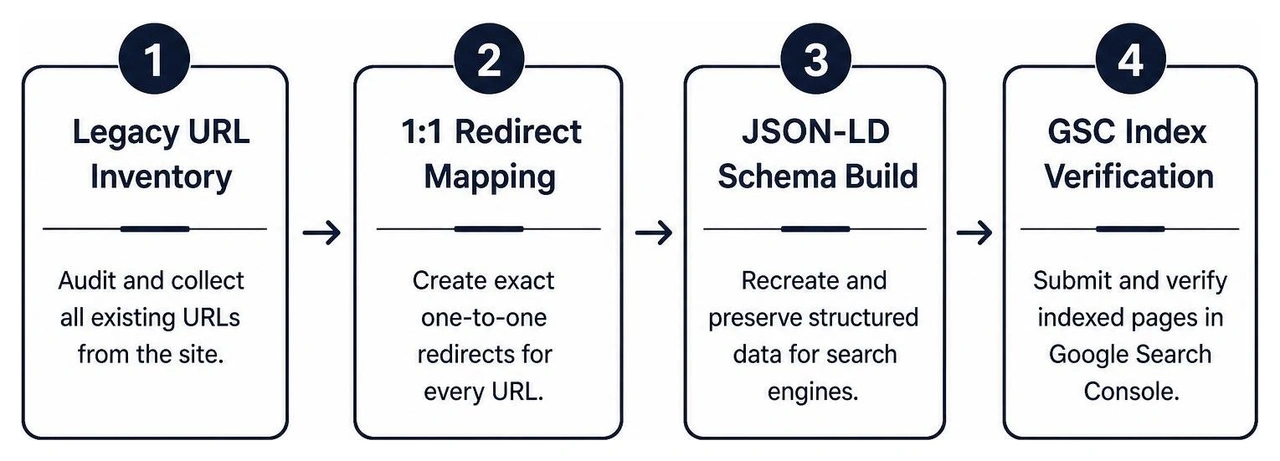
The single greatest risk during any website overhaul is the inadvertent destruction of established search rankings. An experienced development partner audits your historical URL catalog, maps every legacy page to its updated destination, and executes automated 1:1 redirect maps to preserve accrued domain authority.
Agencies should use tools like the Playground - SlugKit utility to test and validate URL slug structures across large datasets. Furthermore, your team must ensure that Open Graph protocols, meta titles, descriptions, and custom JSON-LD structured schemas are systematically preserved and submitted directly to Google Search Console upon deployment.
2. Mobile-First Core Web Vitals and Performance Engineering
Google ranks websites primarily through mobile-first indexing, making Core Web Vitals a major operational requirement rather than an optional checklist item. Performance optimization requires strict adherence to three primary benchmarks:
- Largest Contentful Paint (LCP): Ensuring main visual assets load in under 2.5 seconds.
- Cumulative Layout Shift (CLS): Preventing unexpected layout jumps during page rendering (targeting a score under 0.1).
- Interaction to Next Paint (INP): Minimizing interface lag so user interactions respond immediately (under 200 milliseconds).
Technical teams achieve these scores by compressing and serving next-gen image formats (AVIF/WebP), minifying production code, and implementing modern responsive picture elements. These technical improvements align closely with proven behavioral patterns; in fact, interventions based on behavior change techniques show that removing interface friction directly encourages sustained user participation and long-term engagement.
3. Clean Development Platforms Over Bloated Page Builders
For years, agencies relied on heavy, plugin-laden CMS themes that degraded performance over time. Every additional add-on introduces security vulnerabilities, slows database queries, and increases maintenance costs.
Modern visual development platforms like Webflow solve these challenges by outputting clean, semantic code directly. Building on a modern, structured visual development engine gives your team:
- Native asset optimization without unwieldy external plugin suites.
- Enterprise-grade hosting security and automated backups.
- Clean database scaling for dynamic content structures.
- An intuitive visual editing interface that allows non-technical marketing teams to publish changes in seconds.
4. Interactive UX, Micro-Interactions, and Modern UI Trends
Thoughtful interface interactions turn passive visitors into engaged prospects. Adding modern UI components creates an intuitive digital environment that guides users naturally toward conversion points.
High-impact interactive elements include:
- System-Aware Dark Mode Toggles: Providing visual comfort while reducing power consumption on OLED displays.
- Dynamic CMS Content Filtering: Allowing prospects to sort through portfolios, service catalogs, or case studies instantly without page reloads.
- Tactile Micro-Interactions: Subtle button states, hover animations, and smooth progress bars that offer visual feedback.
- Accessible Navigation Frameworks: Sticky header bars paired with WCAG-compliant color contrast ratios to ensure complete usability for every visitor.
5. Content Migration and Search Hierarchy Restructuring
A visual redesign provides the ideal opportunity to streamline your content hierarchy. Migrating articles, case studies, and landing pages must be handled methodically to protect hard-earned keyword rankings.
Ensure your chosen agency structures pages with unambiguous heading hierarchies (H1 through H4), reinforces topical authority through intentional internal linking, and ensures no orphan URLs are left behind during data transfers. A structured content migration strategy safeguards your current organic footprint while establishing clear pathways for emerging search queries.
6. Transparent Ownership of Design Files and Staging Assets
A concerning practice in the digital agency world involves retaining client assets hostage behind proprietary staging tools or holding administrative rights over production databases.
Before signing any agreement, demand full legal ownership of:
- Complete Figma design systems, component libraries, and master typography kits.
- Raw code repositories, custom styling sheets, and staging environments.
- Master administrative credentials for your CMS, DNS records, analytics profiles, and hosting accounts.
- Clear agreements confirming zero ongoing licensing penalties or vendor lock-in fees if you transition teams.
Realistic Project Timelines, Cost Structures, and ROI Metrics
A professional website redesign requires disciplined project governance to avoid scope creep and budget overruns. Understanding the delivery milestones and financial models up front helps your internal leadership plan resources effectively. For organizations seeking rapid, high-impact transformations, specialized website redesign services offer clear models tailored to specific operational goals.
What Redesign Projects Actually Cost and How Long They Take
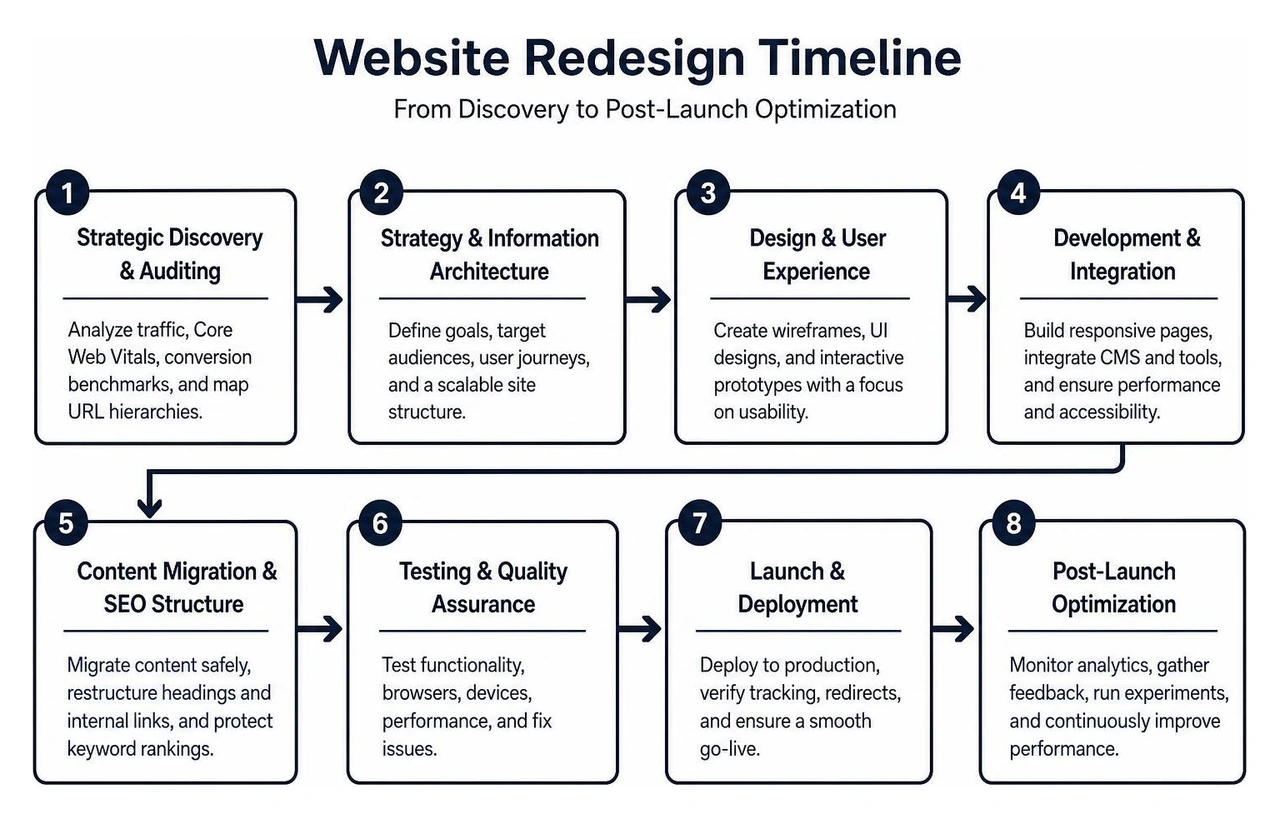
Redesign timelines typically scale according to site complexity, custom asset creation, dynamic database requirements, and integration workflows:
- Strategic Discovery & Auditing (Weeks 1–2): Analyzing historical traffic, evaluating Core Web Vitals, establishing conversion benchmarks, and mapping URL hierarchies.
- Visual Prototyping & Wireframing (Weeks 3–5): Constructing responsive desktop and mobile layouts in Figma, establishing UI design tokens, and validating interactive prototypes.
- CMS Development & Integration (Weeks 6–9): Building clean layouts in Webflow, configuring custom database fields, and connecting marketing automation tools.
- Quality Assurance, Content Migration, & Deployment (Weeks 10–12): Executing 1:1 redirect rules, running cross-browser testing, verifying accessibility standards, and pointing live DNS records.
Project investments generally fall into distinct tiers based on architectural requirements:
- Core Business Presence ($5,000 – $10,000): Streamlined informational layouts with standardized CMS setups, ideal for service teams upgrading from legacy sites.
- Standard Commercial Platform ($10,000 – $20,000): Multi-layered corporate architectures featuring custom animations, dynamic filtering, API connections, and expanded page counts.
- Complex Multi-Platform Systems ($20,000+): Scaled enterprise sites with extensive multi-database migrations, specialized localization, dynamic user portals, and deep CRM integrations.
How a Website Redesign Service Drives Conversion Rates and Lead Generation
A well-executed redesign functions as a full-time sales asset. By replacing confusing navigation and buried forms with clear, value-focused layouts, modern websites routinely generate conversion lifts ranging from 20% to over 50%.
Positioning unambiguous value propositions above the fold ensures prospects immediately understand your core service offerings. Placing prominent, contextual calls-to-action throughout user pathways—rather than hiding forms solely in footers—captures intent the moment a visitor is ready to engage.
Post-Launch Performance Metrics Every Business Must Track
Deploying your new website marks the beginning of an ongoing optimization phase, not the end of the project. Tracking user interactions through Google Analytics 4, search visibility trends, and technical health checks validates your return on investment and reveals immediate opportunities for conversion rate refinement.
Essential Technical and Behavioral KPIs
- Core Web Vitals Pass Rates: Continuously monitor real-world LCP, CLS, and INP scores via Google Search Console to protect organic rankings.
- Mobile Bounce and Engagement Rates: Measure whether faster load speeds and responsive interfaces keep smartphone visitors on-site longer.
- Organic Search Index Stability: Watch indexed URL counts and organic search impressions to confirm that legacy 301 redirects are processing cleanly.
- Conversion Funnel Velocity: Track completion percentages for primary inquiry forms, appointment schedules, and phone link clicks across critical landing pages.
- Average Session Duration: Longer time spent on key educational resources and case studies demonstrates clear content alignment with visitor intent.
Frequently Asked Questions About Redesigning Your Website
Will my existing website stay live during the redesign process?
Yes. Your current website remains fully operational and accessible to public visitors throughout the entire redesign timeline. All wireframing, development, and CMS configuration takes place inside a protected staging environment. Once testing and quality assurance checks are complete, deployment is scheduled during off-peak traffic hours to ensure zero downtime.
How long after launch will my SEO rankings stabilize?
Search engines typically take between two and six weeks to fully crawl updated sitemaps, process 1:1 301 redirect paths, and recalculate indexing metrics. Because structural overhauls improve Core Web Vitals, internal link architectures, and schema structures, most businesses see their search rankings stabilize and begin trending upward shortly after this initial re-crawling period.
Who owns the design files and website assets after handover?
With a transparent agency partner, you retain 100% full legal ownership of all project deliverables upon project completion. This includes master Figma design systems, production code assets, CMS content databases, and administrative credentials across your hosting and domain accounts. You should never agree to terms that impose ongoing licensing fees simply to maintain access to your own website.
Conclusion
A successful website redesign requires a balance of visual clarity, sound technical architecture, and measurable business outcomes. Settling for an agency that delivers bloated code or vague project milestones drains your marketing budget while holding back your lead generation.
By demanding clean visual development on platforms like Webflow, strict Core Web Vitals compliance, transparent asset ownership, and meticulous SEO preservation, you transform your website into a reliable engine for long-term growth.
When you are ready to modernize your digital presence, working with the team at Refresh gives you a dedicated partner focused on building fast, high-converting platforms tailored to your business goals. Explore our complete website redesign roadmap to start planning your next digital upgrade.