Why Small Businesses Need a Strategic Social Media Presence
Establishing a focused online footprint is no longer optional for small and medium-sized enterprises. Modern consumer behavior has transformed social networks into primary search engines and direct communication channels. When potential clients evaluate local brands—whether in Pittsburgh, PA, Cleveland, OH, or Charlotte, NC—they frequently check social channels to verify credibility, inspect recent work, and evaluate responsiveness.
Why SMB Social Media Drives Growth and Customer Loyalty
Executing a thoughtful smb social media framework delivers advantages that ripple across your business. Rather than relying solely on traditional advertising, social channels build dynamic two-way relationships. Over 60% of marketers leverage social platforms to enhance audience segmentation and deliver personalized experiences.
Key drivers of growth include:
- Expanded Brand Visibility: With 56% of small business customers increasing their social media activity, maintaining an active profile keeps your business top-of-mind.
- Direct Web Traffic and Lead Generation: Social networks serve as active touchpoints that direct interested users to custom landing pages built on modern platforms like Webflow.
- Elevated Customer Expectations: Today's buyers want quick answers. Research shows 57% of consumers reach out to brands on social media with questions, while 45% do so to resolve product issues.
- Direct Revenue Retention: Meeting customer support expectations matters. About 80% of customers expect a response on social media within 24 hours, and 50% will walk away from a business that ignores negative posts.
Prioritizing active social media customer engagement helps turn casual followers into long-term brand advocates.
Overcoming Common SMB Social Media Challenges and Time Constraints
While the potential of social media is substantial, small business owners routinely face operational friction. In industry research, 62% of small businesses cited "not enough time" as their biggest barrier to extracting value from social channels. Meanwhile, medium-sized businesses struggle with ROI tracking, with 49% reporting an inability to accurately measure value.
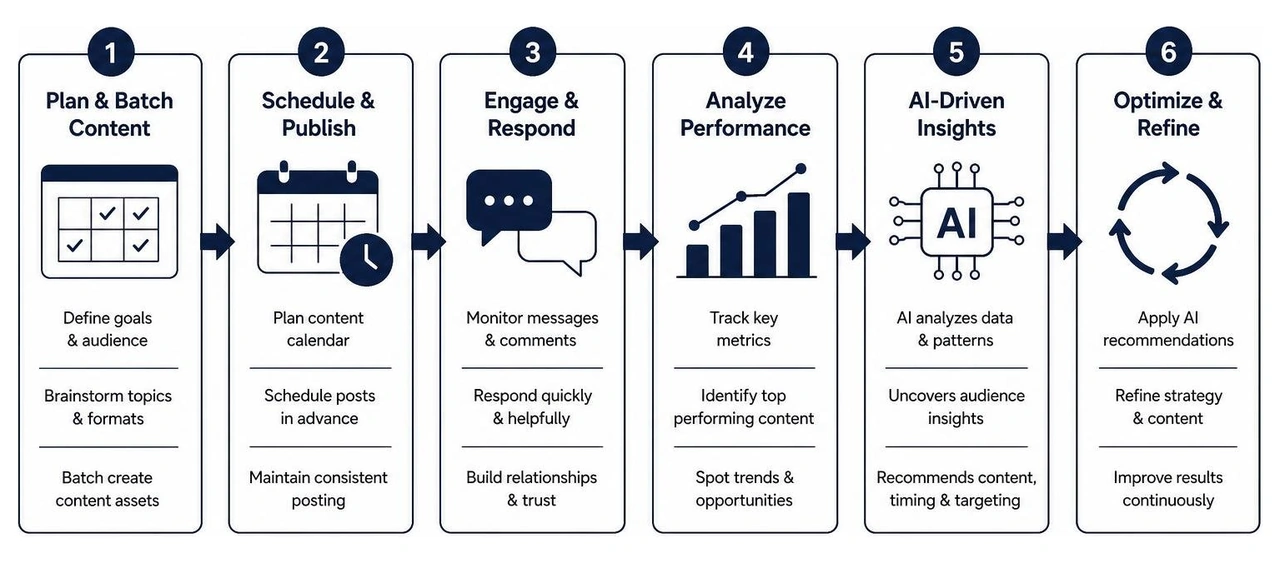
To protect your team's limited bandwidth and overcome these hurdles, consider these streamlined operational habits:
- Focus Your Efforts: Avoid overextending across five or six channels. Master one or two platforms where your ideal buyers gather.
- Batch Content Creation: Schedule dedicated time once a week or month to outline, record, and draft social assets rather than creating posts on the fly daily.
- Establish Clear Protocols: Define response templates and workflows so staff can address inquiries rapidly without reinventing answers.
- Partner with Experts: Professional social media management allows your core team to stay focused on operations while external specialists manage scheduling, creative direction, and analytics.
Choosing the Right Social Media Platform for Your Business
Every platform caters to unique user expectations, content formats, and demographic profiles. Attempting to build an active audience everywhere simultaneously dilutes quality and exhausts resources. Selecting the correct network depends entirely on your business model (B2B vs. B2C) and target buyer personas.

Evaluating Top Channels for Target Audience Fit
To maximize effort and return, align your brand with the primary social media platform options tailored to your specific industry goals:
- Facebook: Remains a dominant hub for local community reach and broad demographic access, with roughly 69% of U.S. adults using the platform. It is exceptionally well-suited for localized service providers and B2C brands seeking direct community feedback.
- LinkedIn: The undisputed leader for B2B engagement. LinkedIn generates 80% of all B2B social media leads and delivers a visitor-to-lead conversion rate of 2.74%—three times higher than Facebook or X.
- YouTube: Used by 73% of U.S. adults, YouTube serves as the second-largest search engine worldwide. Long-form video guides and product walkthroughs provide lasting search visibility that continually drives website traffic.
- Instagram: A visual powerhouse ideal for showcase-driven industries such as design, architecture, food service, and retail. It offers direct avenues for visual branding and user-generated content.
- X (formerly Twitter): Offers direct channels for real-time customer service and public relations outreach, allowing companies to connect directly with regional journalists and industry voices.
Businesses operating in key hubs can also research localized agency landscapes, such as exploring Top Pittsburgh, PA Social Media Companies 2026, to see how regional peers structure platform strategies.
Building a Winning SMB Social Media Strategy from Scratch
A successful presence requires deliberate planning. Randomly posting promotional flyers rarely yields sustainable business growth. Instead, small businesses need a cohesive digital and social media marketing strategy that connects channel management with landing pages, search optimization, and lead capturing.
Setting up your digital infrastructure correctly from day one simplifies management. Proper social media account setup involves securing handle consistency, setting up business profiles, setting up security protocols like two-factor authentication, and ensuring your bio links point directly to high-converting Webflow landing pages.
Essential Content Mix for Engaging Your Audience
High-performing accounts follow a varied posting schedule that balances education, proof, and entertainment. Relying exclusively on self-promotional content drives followers away.
To maximize engagement, build your calendar around a balanced content mix:
- Educational Insights: Share actionable industry tips, how-to breakdowns, or quick infographics that solve common customer problems.
- Behind-the-Scenes Glimpses: Humanize your enterprise by highlighting your team, work environments, values, and operational processes.
- Video Content: Video captures attention effectively. 74% of consumers share video content from brands on social media. Short video clips, tutorials, and product highlights consistently deliver high reach.
- User-Generated Content & Social Proof: Share client testimonials, case studies, and customer posts. Showing real results validates your service quality.
- Interactive Elements: Conduct quick polls, ask questions, and host live Q&A sessions to boost feed visibility through organic interactions.
Exploring social media content marketing combined with fresh creative social media strategies ensures your feed remains informative and appealing over time.
Integrating Paid Social Ads and Multi-Channel Campaigns
While organic reach builds community trust, organic algorithm updates can restrict unpaid post distribution. Combining organic posting with targeted social advertising accelerates results and widens your sales funnel.
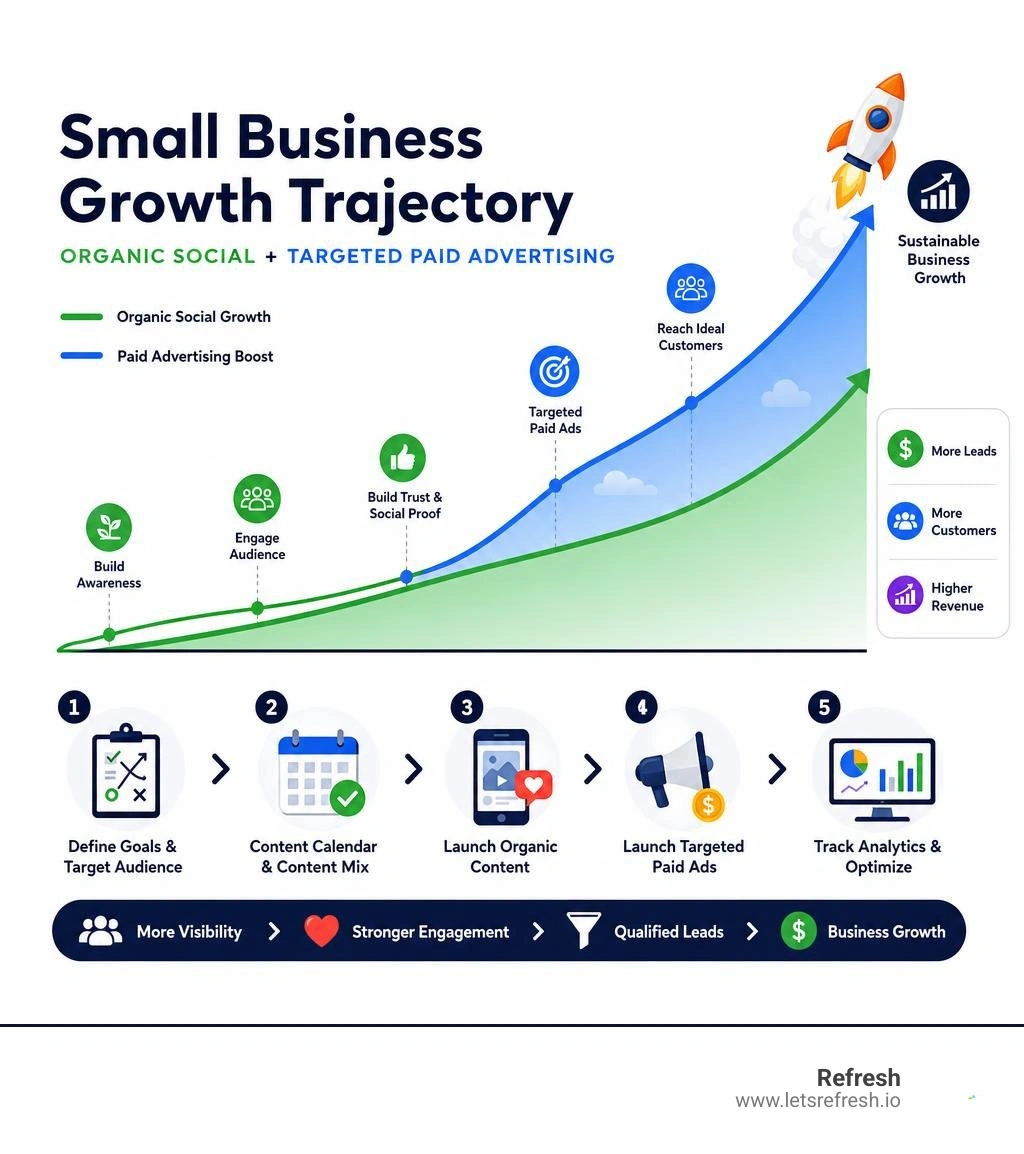
Paid campaigns allow small businesses to pinpoint audiences by zip code, demographic parameters, professional titles, and specific interest categories. For example, businesses targeting regional growth can review guides like Powerful Social Media Marketing For Cleveland Small ... to evaluate hyper-targeted geographic advertising methods.
By linking social ads to optimized lead magnets, email campaigns, and customized web pages, you convert casual social scrollers into qualified prospects. Reviewing a comprehensive social media ad services complete guide helps clarify how paid campaigns fit into your broader digital stack.
Measuring Performance and Optimizing SMB Social Media ROI
To optimize your marketing investments, tracking post distribution alone is not enough. You must monitor real business metrics that reflect growth and lead volume.
Utilizing modern social media analytics tools allows you to quantify campaign performance and make data-backed adjustments.
| Metric Category | Key Indicators | Strategic Goal |
|---|---|---|
| Reach & Awareness | Impressions, Share of Voice, Audience Growth Rate | Expand brand presence in target geographic markets. |
| Engagement | Comments, Shares, Likes, Video Completion Rate | Measure content relevance and audience interest. |
| Traffic & Conversions | Click-Through Rate (CTR), Referral Traffic, Conversions | Evaluate direct website visitors and incoming leads. |
| Customer Experience | Response Time, Resolution Rate, Sentiment Score | Protect brand reputation and drive client retention. |
Consistently assessing these metrics ensures your efforts support reliable social media lead generation rather than vanity figures.
Frequently Asked Questions about SMB Social Media
What is the most effective social media network for small business lead generation?
The most effective platform depends on your business model. For B2B companies, LinkedIn is the top performer, generating 80% of B2B social leads with high visitor-to-lead conversion rates. For localized consumer services or retail brands, Facebook and Instagram remain ideal choices due to robust location targeting and direct messaging features.
How can a small business overcome time constraints when managing social channels?
Small businesses can manage social presence efficiently by selecting 1–2 key networks, batching content creation once a week, using scheduling platforms, and preparing quick-response templates for common customer inquiries. Partnering with a specialized digital agency for professional management also helps maintain posting consistency without burdening internal teams.
How long does it take to see tangible business results from social media efforts?
Paid social campaigns can produce immediate lead activity within days of launch. Organic social marketing, however, typically requires 3 to 6 months of consistent posting, engagement, and optimization to build recognizable brand awareness, active community trust, and steady referral traffic.
Conclusion
Building a strong smb social media presence is a long-term strategy that earns customer trust, drives qualified traffic, and fuels predictable revenue growth. By picking the right channels, maintaining a reliable content schedule, responding promptly to customer inquiries, and connecting social efforts to high-performing Webflow websites, your company establishes a solid foundation for market leadership.
As AI search experiences transform how buyers find local service providers, aligning your social ecosystem with Generative Engine Optimization (GEO) ensures your brand stays visible across conversational search tools and traditional engines alike. At Refresh, we partner with growing businesses across Pittsburgh, PA, Cleveland, OH, Charlotte, NC, and nationwide to turn digital complexity into measurable growth through strategy, Webflow development, SEO, and social management.
Ready to take your digital presence further? Learn More About Refresh GEO Services and discover how strategic alignment can drive real revenue for your business.


.avif)