
Launch a Digital Marketing Campaign With a Clear Plan
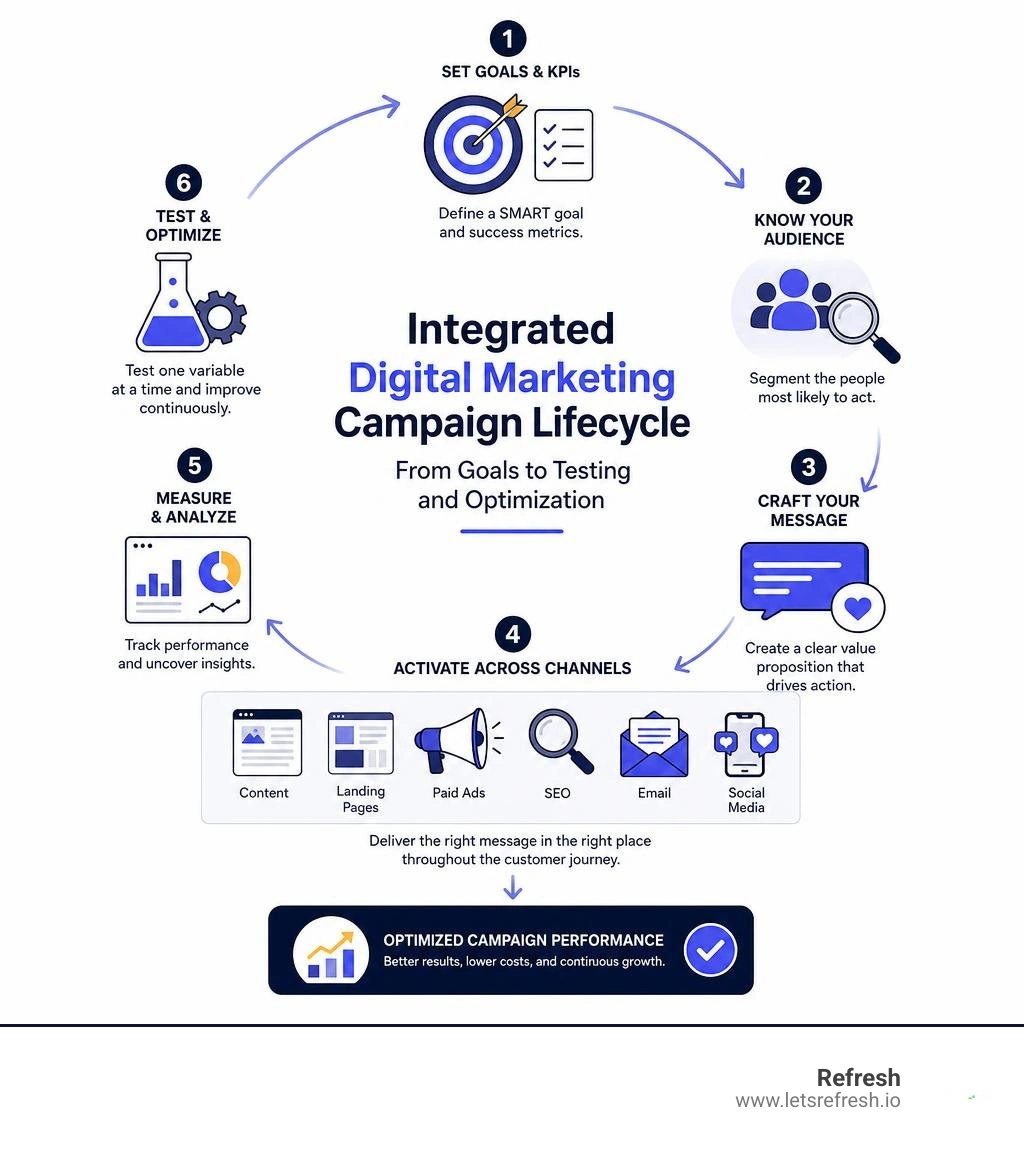
Creating a digital marketing campaign starts with a focused goal, a defined audience, one clear message, and a small set of channels that work together. Build your campaign in this order:
- Set a SMART goal and choose the KPIs that prove progress.
- Segment the people most likely to need your product.
- Create a value proposition that gives them a reason to act.
- Match content, landing pages, paid ads, SEO, email, and social posts to their journey.
- Track results, test one variable at a time, and improve as data comes in.
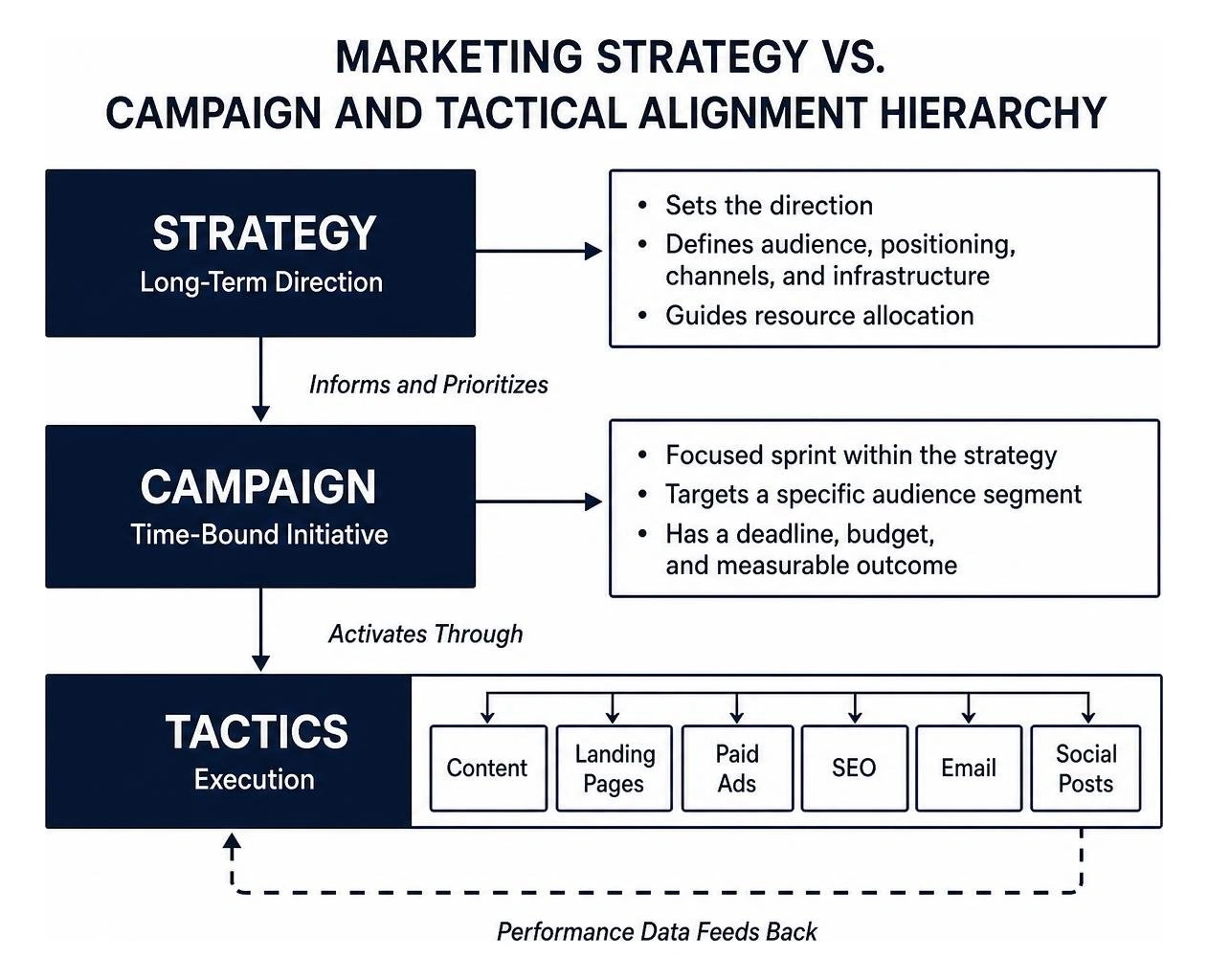
A campaign is a time-bound push, such as generating qualified demo requests for a new product launch. It is not the same as your long-term digital marketing strategy. Your strategy sets the direction; the campaign turns that direction into coordinated actions with a deadline, budget, and measurable outcome.
For a growth-stage startup, the website is often the campaign's conversion hub. A fast, clear Webflow site and focused landing pages give every channel somewhere useful to send prospective customers. Generative Engine Optimization (GEO) can also help make your expertise easier for AI-powered search tools to understand and surface alongside established SEO work.
I am Alexander Palmiere, Founder and CEO of Refresh Digital Strategy, where we have launched more than 200 websites and helped small and midsized businesses improve traffic, engagement, and online growth. My experience in creating a digital marketing campaign combines practical digital strategy, responsive Webflow development, SEO, branding, and targeted advertising into systems teams can run and measure.
Discover more about creating a digital marketing campaign:
- best online marketing strategies
- different online marketing strategies in e commerce
- digital and social media marketing strategy
Understanding Digital Marketing Campaigns vs. Long-Term Strategies
To generate consistent returns on marketing spend, businesses must recognize where their overarching strategy ends and where specific campaigns begin. Only 17 percent of businesses clearly define their digital marketing strategies. Without a unified roadmap, many businesses default to disjointed marketing activities that burn through budgets without moving the needle on revenue.
Understanding The Importance of a Strong Digital Strategy for Small to Medium-Sized Businesses helps prevent these common pitfalls. A digital marketing strategy represents your perpetual game plan. It defines your market positioning, overarching audience profiles, technical infrastructure, and long-term commercial goals.
In contrast, a campaign is a focused sprint within that marathon. It is an integrated set of activities aimed at driving a distinct outcome among a specific audience segment over an established duration.
Key Differences Between Strategy, Campaigns, and Tactics
Aligning your organization requires distinguishing between strategic vision, campaign initiatives, and granular tactical execution.
| Dimension | Digital Marketing Strategy | Digital Marketing Campaign | Marketing Tactics |
|---|---|---|---|
| Scope | Organization-wide vision and market positioning | Targeted objective for a specific audience segment | Individual tasks, assets, and channel workflows |
| Timeframe | Multi-year or annual evergreen roadmap | Medium-term (e.g., 4 to 12 weeks) | Daily, weekly, or immediate execution |
| Primary Goal | Sustained business growth and market share | Specific conversions, product launches, or event leads | Immediate clicks, impressions, downloads, or open rates |
| Example | Expanding market share across mid-market B2B brands | A 6-week initiative generating demo signups for a new feature | Running A/B tests on a Webflow landing page CTA button |
When marketing teams confuse these three layers, they risk losing strategic focus. For instance, 20 percent of marketers pivoted their established marketing plans last year due to the potential for a recession. Those with an established strategic foundation adapted seamlessly by shifting tactical levers, while organizations operating without clear plans struggled to measure their return on investment.
Core Planning Frameworks: RACE and SOSTAC®
To bridge high-level vision and tactical execution, professional marketers rely on structured frameworks. Combining PR Smith’s SOSTAC® methodology with the RACE lifecycle model provides an actionable blueprint for campaign governance.
The SOSTAC® framework systematically addresses every stage of planning:
- Situation Analysis: Where does the brand currently stand within the digital landscape?
- Objectives: What concrete milestones must the campaign achieve?
- Strategy: What core positioning and segmentation will drive our message?
- Tactics: Which specific digital channel combinations will execute the strategy?
- Action: Who manages specific asset deliverables, technical integrations, and schedules?
- Control: How will real-time dashboards, KPIs, and analytics govern campaign adjustments?
We map these operational stages across the RACE lifecycle (Reach, Act, Convert, Engage). Understanding How to structure an effective campaign plan to win more customers ensures integrated communications remain coherent, consistent, continuous, and complementary across every prospect interaction.
Step-by-Step Process for Creating a Digital Marketing Campaign
Executing an effective campaign requires moving through a structured sequence. Following a proven framework like the one in our Digital Marketing Strategies Ultimate Guide 2026 ensures every creative asset, technical setup, and promotional dollar serves a clear commercial objective.

Step 1: Setting SMART Goals and Funnel KPIs
Every successful campaign begins with absolute mathematical clarity. Rather than aiming to "increase web visibility," set goals that adhere to the SMART criteria: Specific, Measurable, Attainable, Relevant, and Time-bound.
Align these targets directly with distinct stages of your customer acquisition funnel to systematically Drive More Leads:
- Top-of-Funnel (Awareness): Measure unique reach, search impressions, video completion rates, and Generative Engine Optimization (GEO) brand citations.
- Middle-of-Funnel (Consideration): Track organic clicks, high-intent page dwell time, gated asset downloads, and email newsletter signups.
- Bottom-of-Funnel (Conversion): Quantify sales-qualified leads (SQLs), demo bookings, software evaluations, and attributed pipeline revenue.
Establishing benchmark performance data before launching ensures that incoming metrics reflect true commercial progress rather than vanity traffic spikes.
Step 2: Defining Target Personas and Audience Segments
Marketing to everyone guarantees connecting with no one. Segmenting your market into defined audience groups enables personalized messaging that drives measurable engagement.
Review our guide on Crafting Your Ideal Customer: A Guide to Developing a Buyer Persona for Small Businesses to refine your profiling. Focus on:
- Demographics & Firmographics: Company size, revenue bands, geographic clusters, job titles, and operational roles.
- Psychographics & Motivations: Core professional objectives, internal pressures, and criteria for evaluating vendors.
- Pain Points & Friction: The immediate bottlenecks, inefficiencies, or legacy technology limitations your audience faces.
Understanding these traits lets you tailor messaging for localized campaigns—such as businesses targeting regional hubs across Pittsburgh, PA, Cleveland, OH, or Charlotte, NC—to speak directly to regional market conditions and sector needs.
Step 3: Crafting a Core Value Proposition and 'Big Idea'
At the center of every memorable campaign sits a compelling "Big Idea"—a unifying narrative hook that translates complex features into clear customer outcomes. Evaluate your messaging using the 3 Cs model:
- Consumer: Does this message directly resolve a high-priority customer pain point?
- Competitor: Is this narrative distinct from what competitors promote?
- Company: Can our product or service reliably deliver on this promise?
Draft a formal positioning statement: For [target audience], our [product/service] is the only solution that [primary benefit/value promise] because [proof point/reason to believe]. This single message anchors all subsequent ad copy, email nurturing sequences, and landing page content.
Step 4: Selecting Channel Levers and Media Types
Modern campaigns require selecting a focused set of complementary channels rather than spreading resources thin across every available network.
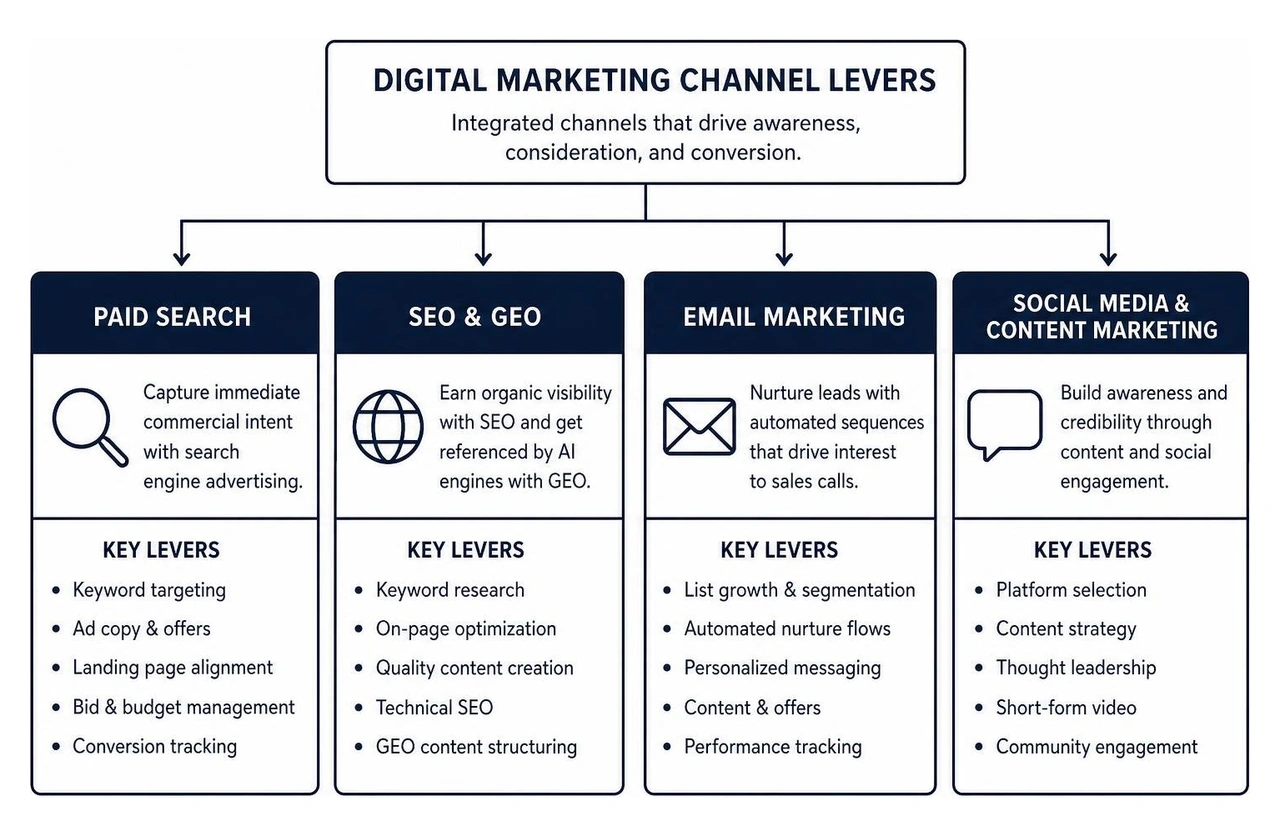
Integrate these essential digital levers based on your target audience's online habits:
- Paid Advertising: Search engine marketing captures immediate commercial intent, while paid social builds demand. Professional Digital Ad Campaign Management ensures budget efficiency across these competitive channels.
- Search Engine Optimization & GEO: Traditional SEO captures keyword demand, while Generative Engine Optimization structures your content so AI engines reference and recommend your brand.
- Email Marketing: Automated lead nurture sequences move qualified prospects from initial interest to sales calls.
- Social Media & Content Marketing: Thought leadership, practical case studies, and short-form video reinforce brand credibility across the evaluation phase.
Step 5: Developing Assets, Content, and Landing Pages
Your digital assets must guide prospective buyers smoothly toward conversion. Directing campaign traffic to a generic homepage often wastes ad spend. Instead, route prospects to custom, focused landing pages tailored to the campaign's specific message.
Webflow serves as our platform of choice for conversion infrastructure. Its responsive design capabilities, clean code standards, enterprise-grade security, and fast page loads provide the technical foundation needed to Increase Website Conversions. Build out dedicated campaign assets, including:
- Dynamic ad creatives and value-focused copy variations
- High-value lead assets (such as industry research, benchmarking calculators, or technical guides)
- Frictionless lead intake forms integrated directly with your sales pipeline
Structuring Timelines, Budgets, and Cross-Channel Execution
Flawless campaign execution requires careful orchestration across creative, technical, and media management teams.

Reverse-Timeline Planning for Creating a Digital Marketing Campaign
The most reliable way to schedule a campaign is by reverse scheduling—working backward from your target launch date (right to left). This approach ensures technical setups, asset creation, and stakeholder reviews are completed on time.
An 8-week pre-launch workflow typically includes:
- Weeks 1–2 (Discovery & Positioning): Finalize SMART objectives, analyze audiences, and solidify the campaign narrative.
- Weeks 3–4 (Asset & Technical Production): Design ad visuals, draft copy, build Webflow landing pages, and configure CRM automated workflows.
- Weeks 5–6 (Integration & Quality Assurance): Test lead capture forms, verify tracking pixels, configure UTM parameters, and set up analytics dashboards.
- Week 7 (Pre-Launch QA & Staging): Seed organic content, schedule initial email broadcasts, and submit ad creatives for platform compliance reviews.
- Week 8 (Launch & Initial Optimization): Turn on paid campaigns, monitor real-time tracking health, and evaluate initial conversion rates.
Allocating Budgets Across Paid, Owned, and Earned Media
Distribute your campaign budget strategically across asset development, paid media, and operational contingencies:
- Paid Media (60–70% of total budget): Direct ad spend allocated to search engine marketing, retargeting pools, and paid social channels.
- Creative & Technical Asset Production (20–30%): Investment in custom landing pages, video content, copywriting, and automated email workflows.
- Reserve Contingency Fund (10%): A dedicated budget reserve to double down on unexpected high-performing ad sets or fund mid-campaign messaging pivots.
This balanced allocation keeps your campaign adaptable, allowing you to reallocate spend toward the highest-performing channels throughout the launch.
Measuring Performance, Split Testing, and Iterative Optimization
Launching your campaign is only the beginning. Modern digital marketing relies on continuous, data-driven optimization once your assets are live.
Advanced Testing and CRO When Creating a Digital Marketing Campaign
Split testing (A/B testing) helps isolate performance drivers across your conversion funnel. To maintain data integrity, test only one variable at a time against a control version until results reach statistical confidence.
Prioritize testing these high-impact landing page and ad elements:
- Primary headline hooks and subheadings
- Call-to-Action (CTA) text, colors, and button placement
- Hero visual assets (product screenshots versus custom lifestyle photography)
- Form friction levels (single-field emails versus multi-step qualifying questions)
- Lead magnet formats (interactive audit tools versus downloadable PDFs)
Tracking Analytics and Marketing Attribution
Accurate measurement requires an integrated data infrastructure configured before launching any public-facing campaigns:
- UTM Tracking Frameworks: Use consistent naming conventions across all paid, social, email, and referral links to accurately capture traffic sources in your analytics platform.
- Multi-Touch Attribution: Analyze how initial touchpoints (like organic search or brand awareness ads) assist final conversion events, rather than relying solely on last-click attribution.
- Generative Engine Optimization Tracking: Monitor how often AI search systems cite your brand, data, and landing pages for relevant industry search queries.
- Conversion Tracking: Monitor real-time lead submissions, phone inquiries, and demo bookings directly inside your CRM to evaluate lead quality alongside volume.
Frequently Asked Questions About Digital Marketing Campaigns
What is the recommended duration for a digital marketing campaign?
A standard digital marketing campaign runs for 6 to 12 weeks. This timeframe provides enough runway to gather statistically significant performance data, optimize ad creatives, and guide prospective leads through multi-touch conversion funnels without exhausting your audience with creative fatigue.
How do you calculate the optimal budget for a new campaign?
Calculate your budget backward from your revenue goals. Determine your target customer count, divide it by your average sales close rate to find required leads, and multiply those leads by your historical Cost Per Lead (CPL) across target channels. Always add a 10% to 15% testing buffer for creative optimization and exploratory targeting.
How do paid and organic channels support each other during a launch?
Paid and organic strategies work best together. Paid ads drive immediate high-intent traffic to your Webflow landing pages, generating rapid behavioral insights and conversion data. You can then use those insights to refine your organic content marketing, SEO strategy, and Generative Engine Optimization efforts for long-term compounding growth.
Conclusion
Creating a successful digital marketing campaign requires clear strategic focus, accurate audience targeting, conversion-focused web architecture, and disciplined optimization. By defining clear SMART goals, developing audience-specific value propositions, building on scalable platforms like Webflow, and tracking data across every funnel stage, you transform marketing spend into reliable, compounding business growth.
Ready to launch high-performance digital marketing campaigns and elevate your online presence? Partner with Refresh to build custom Webflow websites, execute targeted digital advertising, and implement comprehensive search strategies that drive measurable business results.


.avif)